Active Calculus: Single Variable
Matthew Boelkins; David Austin; Christina Safranski; Steven Schlicker
91 selected books, grouped by course
Compare three books with short trial tasks, follow a six-step reading route, and test your reasoning with worked examples and changed assumptions.
Compare three algebra routes and solve original quotient-map cases, distinguishing additive structure, multiplication and the limits of an isomorphism claim.
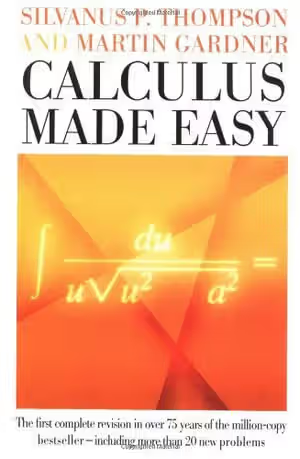
MathematicsCalculus and Multivariable CalculusCompare two free calculus texts with Thomas, follow six concrete study tasks, and audit a worked rate-and-accumulation problem.
MathematicsComplex AnalysisCompare analytic and geometric texts, compute a double-pole residue, then change the contour and explain exactly why the original Cauchy-formula argument fails.
MathematicsDifferential EquationsCompare three ODE routes and solve original switching-input problems, distinguishing a discontinuous forcing term from a separately imposed jump in the state.
MathematicsDiscrete MathematicsCompare three discrete mathematics texts and solve original matching problems using exact counting, Hall obstructions and a minimal repair.
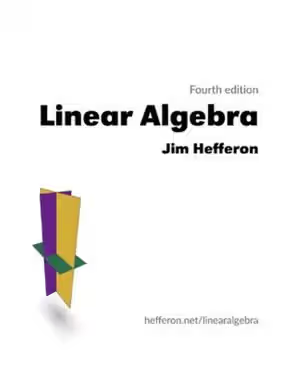
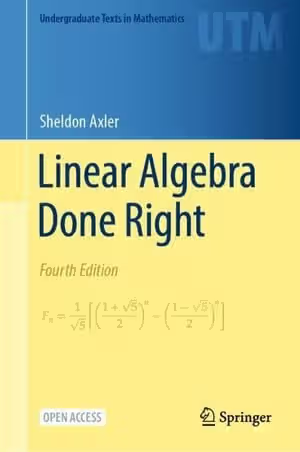
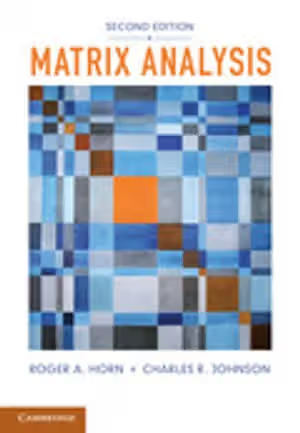
MathematicsLinear AlgebraCompare three linear algebra routes, test each book with a short task, and solve original rank, nullspace and least-squares problems with explicit checks.
MathematicsProbability and StatisticsCompare probability and statistics reading routes, then solve sampling and reveal-protocol problems that separate counting, conditioning and independence.
MathematicsReal AnalysisCompare three analysis texts, build epsilon proofs and test uniform convergence with original examples whose peaks move as the index grows.
A place to start
Suggested reading compiled by this site for university students and independent learners. This is not an official university reading plan. Check your own syllabus before buying; editions and exercise numbers differ.
Browse all books ↓Choose by course level, not by the most advanced title. Calculus and linear algebra build computational tools; proof-based courses such as real analysis or abstract algebra require a different way of reading. Check prerequisites before treating a rigorous text as a first introduction.
Books are grouped by the course they are usually read for, then ordered from introductory to advanced.
Study guides: Choose a calculus text and connect rates to accumulation →
Study guides: Linear algebra: choose a route from equations to subspaces →
Study guides: Real analysis: make the quantifiers do the work →
Study guides: Abstract algebra: name the operation a map must preserve →
Study guides: Probability foundations: count the experiment you actually observed →
Study guides: Differential equations: solve, match and check the model →
Study guides: Discrete structures: count only assignments that can coexist →
Study guides: Complex analysis: a contour is part of the hypothesis →