01 / Reading Guide
Reading Guide
Real analysis: make the quantifiers do the work
Compare three analysis texts, build epsilon proofs and test uniform convergence with original examples whose peaks move as the index grows.
Study route and exercise: University Reading List editorial project.
Citation
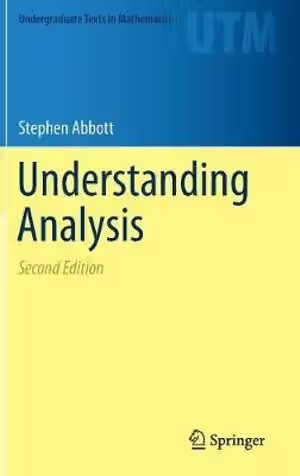
Abbott, S. (2015). Understanding Analysis (2nd ed.). Springer. Undergraduate Texts in Mathematics.
Chapter Summary
Each chapter opens with an informal discussion section that raises a motivating question. It then develops a lean core of definitions and proofs. It ends with a project section, where the exercises carry the argument, and a short epilogue. Chapter 8 consists entirely of projects.
Chapter 1: The Real Numbers
The chapter opens with the irrationality of √2 as the reason a larger number system is needed. It then gathers some preliminaries before stating the Axiom of Completeness and drawing out its consequences. It closes with cardinality and Cantor's Theorem, including the uncountability of the real numbers.
Chapter 2: Sequences and Series
The discussion shows that rearranging the alternating harmonic series changes its sum. This is a warning that finite arithmetic does not carry over to infinite sums. The chapter then develops:
- limits of sequences
- the Algebraic and Order Limit Theorems
- the Monotone Convergence Theorem
- subsequences and the Bolzano–Weierstrass Theorem
- the Cauchy Criterion and properties of infinite series
The project covers double summations and products of series.
Chapter 3: Basic Topology of R
The chapter starts from the Cantor set, which has zero length yet is uncountable. It treats open and closed sets, compact sets, and perfect and connected sets, with Baire's Theorem as the project. The preface concedes that this chapter is longer than later chapters strictly need.
Chapter 4: Functional Limits and Continuity
Dirichlet's and Thomae's functions motivate a careful definition of a functional limit. The chapter covers continuous functions, continuity on compact sets and the Intermediate Value Theorem. Its project asks which sets can be the set of discontinuities of a function.
Chapter 5: The Derivative
The discussion asks whether derivatives must be continuous, using the family xⁿ sin(1/x) as test cases. The chapter proves that derivatives have the intermediate value property (Darboux's Theorem) and develops the Mean Value Theorems. It ends with the construction of a continuous nowhere-differentiable function.
Chapter 6: Sequences and Series of Functions
The discussion, new in this edition, recounts how Euler's manipulation of power series led to the sum of 1/n². The chapter treats:
- uniform convergence, including its interaction with differentiation
- series of functions
- power series and Taylor series, which the second edition moved into the core of the chapter
It closes with a project on the Weierstrass Approximation Theorem.
Chapter 7: The Riemann Integral
The discussion asks how integration should be defined once it is separated from antidifferentiation. The chapter defines the integral, then treats integrating functions with discontinuities and the basic properties. It then proves the Fundamental Theorem of Calculus. According to the preface, the organising theme is a characterisation of integrable functions through continuity. The project completes that theme with Lebesgue's criterion for Riemann integrability.
Chapter 8: Additional Topics
Six self-contained, tutorial-style sections:
- the generalized Riemann integral
- metric spaces and the Baire Category Theorem
- Euler's sum
- inventing the factorial function (the gamma function, with improper integrals and differentiation under the integral sign)
- Fourier series
- a construction of R from Q
Key Concepts
Chapters 1–2: The Real Numbers; Sequences and Series
- Axiom of Completeness: every nonempty set of real numbers that is bounded above has a least upper bound. This is the property that separates R from Q.
- Cardinality: comparing the sizes of infinite sets through one-to-one correspondences, leading to Cantor's Theorem.
- Bolzano–Weierstrass Theorem: every bounded sequence has a convergent subsequence.
Chapters 3–5: Topology, Continuity and the Derivative
- Compact set: a set in which every sequence has a subsequence converging to a point of the set. Chapter 4 studies continuous functions on such sets.
- Intermediate Value Theorem: a continuous function on an interval takes every value between any two of its values.
- Darboux's Theorem: every derivative has the intermediate value property, even when it is not continuous.
Chapters 6–7: Sequences and Series of Functions; The Riemann Integral
- Uniform convergence: convergence of functions at a single rate across the whole domain. Under this condition limits preserve continuity and, with extra hypotheses, differentiability.
- Taylor series: the power series built from a function's derivatives, together with the question of when it actually converges to the function.
- Fundamental Theorem of Calculus: the two-part statement relating integration and differentiation.
- Lebesgue's criterion: a bounded function is Riemann-integrable exactly when its points of discontinuity form a set of measure zero.
Chapter 8: Additional Topics
- Generalized Riemann integral: a modification of the Riemann integral, due to Kurzweil and Henstock, that integrates every derivative.
- Metric space: a set with a distance function, the setting for a more general Baire Category Theorem.
Critical Analysis
Strengths
Questions before theorems. The preface states the aim of focusing on the questions that give analysis its fascination:
- whether the Cantor set contains irrationals
- whether derivatives are continuous or integrable
- whether a smooth function equals its Taylor series
The opening pages of each chapter bear this out. Scott Sciffer reviewed the first edition in the Gazette of the Australian Mathematical Society. He singled out the discussion sections that motivate each chapter and the epilogues that point onward.
Proofs written for beginners. The author says that brevity is deliberately sacrificed for detail. Most proofs come with discussion of strategy and relevant definitions, and routine arguments are moved to the exercises. Reviews quoted by the publisher praise the exposition:
- D. Robbins in Choice (October 2015) called it extraordinarily lucid.
- Mark Hunacek in MAA Reviews (June 2015) called the book the gold standard among single-variable undergraduate analysis texts.
Projects and a revised exercise set. The second edition adds roughly 150 new exercises to about 200 retained from the first. These include Moore-method exercises that ask students to test conjectures and look for examples that may not exist. It also adds three new projects: Euler's sum, the Weierstrass Approximation Theorem and the factorial function. Ryszard Pawlak's zbMATH review of the second edition singles out this didactic design as the book's distinctive feature.
Easy to tailor. The preface marks every project section as optional: 1.6, 2.8, 3.5, 4.6, 5.4, 6.7, 7.6 and all of Chapter 8. It notes that no later theorem depends on the discussion sections, and explains which parts of Chapter 3 the rest of the book needs. Recent syllabi show this flexibility in practice: the Roanoke course skips most project sections, while the UT Tyler course includes several of them. Both stop partway into Chapter 7 (see Common course assignments below).
Stable, current adoption. The second edition (Springer, 2015) is the version listed on recent syllabi:
- Roanoke College, Spring 2025
- UT Tyler, Fall 2024
- Western Kentucky University, Fall 2024
- TAMUC, Fall 2023
Course schedules keyed to its section numbers are therefore easy to find and follow.
Limitations
- Deliberately narrow scope. The book treats real-valued functions of one real variable only. The preface says complex numbers are never used and that the book makes no attempt to be a complete catalogue of results. Students who need multivariable analysis or a reference text will need another book.
- Integration stops short of Lebesgue. The Riemann integral is the main object. Lebesgue's criterion is a project, the Lebesgue integral is only outlined in an epilogue, and the generalized Riemann integral appears as a tutorial in Chapter 8.
- Metric spaces only as a project. General metric spaces appear in a single section of Chapter 8. A course that wants topology in metric spaces from the start will find the core material confined to the real line.
- Little worked support for independent learners. The publisher lists the solutions manual as an instructor resource. Many key arguments in the project sections are deliberately left as exercises.
- Typical schedules stop before the end of Chapter 7. Both the UT Tyler and Roanoke schedules described below end at Section 7.3, early in the Riemann integral chapter. Students following either schedule may therefore need to read the rest of Chapter 7 on their own.
Where It Fits in the Course
Within this course list Abbott is a main text for a first rigorous course in single-variable analysis. It plays that role at Roanoke College, UT Tyler and Western Kentucky University (see Common course assignments below).
Two gentler books prepare for it in different ways:
- Lara Alcock's How to Think About Analysis is described as a study guide on reading definitions and constructing proofs.
- R. P. Burn's Numbers and Functions leads the reader through the same topics by sequenced questions.
Either works well before or alongside Abbott for students who have not yet written many proofs.
For a more comprehensive and more formal treatment afterwards, Bartle and Sherbert's Introduction to Real Analysis and Walter Rudin's Principles of Mathematical Analysis are the natural next steps. Abbott's preface acknowledges Robert Bartle's books as an inspiration for the whole text. Section 8.1 is based on Bartle's article on the generalized Riemann integral. The preface also presents the book as preparation for a second course on complex-valued functions on more general spaces, the broader setting of more formal analysis texts. The epilogues and the metric-space section of Chapter 8 are a useful bridge to it.
How to Use This Book
The book is written for undergraduates meeting rigorous analysis for the first time. It appears in Springer's Undergraduate Texts in Mathematics series, aimed at third- and fourth-year students. The preface names a robust understanding of single-variable calculus as the only prerequisite. It describes the proof-writing experience of a linear algebra course as valuable but not required.
A one-semester plan, following the preface's advice on building a course (designed for 12–14 weeks):
- Core: the main sections of Chapters 1–7, from the Axiom of Completeness to the Fundamental Theorem of Calculus.
- Trim if needed: in Chapter 3 the later chapters rely only on open and closed sets and sequential compactness. Open-cover compactness and perfect and connected sets can be skipped, since direct proofs of the Intermediate Value Theorem are given.
- Discussion sections: read them even if they are not lectured. They prove no theorems needed later, but they introduce examples (the Cantor set, Dirichlet's function) that the rest of the book uses.
- Projects: choose one or two to work through in full. The author uses them in place of a final examination and as group assignments. Section 8.5 on Fourier series is the longest of the Chapter 8 topics.
For self-study, try to answer each discussion section's questions before reading on. Treat the exercises, including the Moore-method items, as the main test of understanding. Solutions are intended for instructors, so a study partner or a companion such as Alcock's guide helps with checking proofs. Students continuing to measure theory should read the Chapter 7 epilogue and Section 8.1 carefully.
Common course assignments
Two recent syllabi publish section-level schedules for the 2nd edition (2015). Both move through the book in order and stop around Section 7.3.
Roanoke College, MATH 381 A Real Analysis (Spring 2025):
- 1.1–1.4 and 1.6
- 2.1–2.7
- 3.1–3.4
- 4.1–4.5
- 5.1–5.3
- 6.1–6.6
- 7.1–7.3
Against the preface's list of optional projects, this path includes the Chapter 1 project (1.6) and skips 1.5. It omits the other project sections (2.8, 3.5, 4.6, 5.4, 6.7) and all of Chapter 8.
UT Tyler, MATH 3345 Real Analysis 1 (Fall 2024): the outline promises Chapters 1–7 "in part or in full as time permits." The weekly schedule runs:
- 1.1–1.6
- Chapter 2
- Chapter 3
- 4.1–4.6
- 5.1–5.4
- 6.1–6.6
- 7.1–7.3
This includes the project sections 1.6, 4.6 (sets of discontinuity) and 5.4 (the nowhere-differentiable function).
Western Kentucky University, MATH 503 Introduction to Analysis (Fall 2024): lists the 2nd edition (ISBN-13 9781493927111) but gives less week-by-week detail.
If you are studying alone, either schedule is a reasonable pacing template. Roanoke's is the leaner path, and UT Tyler's adds some of the projects. Plan to read past 7.3 to reach the Fundamental Theorem of Calculus and Lebesgue's criterion, which the core plan above includes.
Edition and reading route
The edition listed here is the 2015 second-edition hardcover from Springer, ISBN 9781493927111; softcover and ebook identifiers differ. This is the edition used by the 2023–2025 syllabi cited above, so their section numbers match this printing. Those numbers will not necessarily match the first edition, which the second reorganised: Taylor series moved into the core of Chapter 6, and new projects were added.
Chapters 2, 4 and 6 (Sequences and Series; Functional Limits and Continuity; Sequences and Series of Functions) give a direct route from scalar limits to uniform convergence. Before Chapter 6, practise writing an epsilon proof and negating its quantifiers. Use the motivating discussion to predict a counterexample, then verify it with estimates rather than a plot. The publisher's solutions manual is for instructors, and preview access does not give you the full text.