01 / Reading Guide
Reading Guide
Probability foundations: count the experiment you actually observed
Compare probability and statistics reading routes, then solve sampling and reveal-protocol problems that separate counting, conditioning and independence.
Study route and exercise: University Reading List editorial project.
Who this book is for
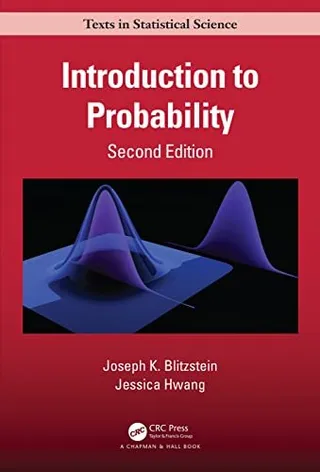
For undergraduates taking a first probability course in mathematics, engineering, computing or the sciences. The book develops intuition through experiments and examples while retaining mathematical explanations. Its parallel organization allows an instructor to emphasize discrete models initially and add continuous topics when the necessary calculus is available.
Prerequisites
Two terms of calculus, including introductory multiple integrals, support the full discrete-and-continuous course. One term can support a discrete-only route. Basic matrix theory is needed for the Markov-chain chapter.
What it covers
Discrete distributions, continuous densities, combinatorics, conditional probability, common distributions, expectation and variance lead into sums, laws of large numbers and the central limit theorem. Generating functions, Markov chains and random walks extend the route. Computing is used to investigate behavior that may initially conflict with intuition.
How to use it
Before simulating, specify the sample space and the random variable so that the program represents the intended experiment. Make a rough prediction, derive an exact result for a small case and compare it with repeated trials. Vary the sample size without assuming every deviation indicates a bug. For conditional probability, state what information has changed. When studying convergence, distinguish a statement about individual outcomes from one about a distribution. Translate older example code into a language you know, checking that the probability model stays unchanged.
Edition and sources
The Dartmouth author route provides all twelve chapters, preface, appendices and exercises. The authors separately announce GNU Free Documentation License redistribution on their project page; consult the supplied file’s notices when copying. This access route is the complete textbook, not an isolated chapter sample.