01 / Reading Guide
Reading Guide
Citation
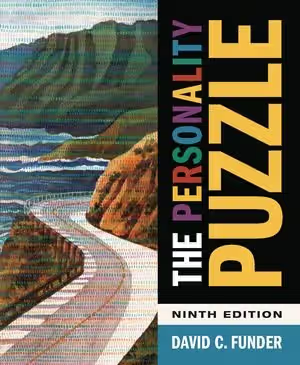
Funder, D. C. (2023). The Personality Puzzle (9th ed.). W. W. Norton & Company.
Chapter Summary
The ninth edition has seventeen chapters. Norton describes Funder's approach as a successful storytelling one that gives personal insights into how to think about research, personality science and applications, and says this edition is more inclusive, featuring the work of psychologists with a variety of identities, and has a thoroughly revised Chapter 7 on how biology connects to personality. The summaries below follow the chapter titles in Norton's contents list, which gives titles only.
Chapters 1–3: The Study of a Person; Personality Data and Assessment; Evaluating Research
The opening block sets out what the study of a person involves, the kinds of data and methods of assessment available, and how to evaluate research. It prepares the reader to judge the evidence used in later chapters.
Chapters 4–6: Persons, Situations, and Personality Judgment; Traits and Types: The Big Five and Beyond; Personality Stability, Development, and Change
The person-situation question and how people judge personality come first, followed by the Big Five and other trait and type systems, and then the stability, development and change of personality over time.
Chapters 7–8: The Anatomy and Physiology of Personality; Genetics and Evolution: The Inheritance of Personality
Two biological chapters: the brain and body in personality (the chapter Norton says was thoroughly revised), and genetics and evolution as sources of personality differences.
Chapters 9–10: Basics of Psychoanalysis; Psychoanalysis After Freud: Neo-Freudians, Object Relations, and Current Research
The psychoanalytic tradition in two chapters, one on its basics and one on later developments and current research.
Chapters 11–12: Humanistic Psychology, Positive Psychology, and the Science of Happiness; Cultural Variation in Experience, Behavior, and Personality
The humanistic approach together with positive psychology and the science of happiness, followed by cultural variation in personality.
Chapters 13–14: Personality Processes: Learning, Motivation, Emotion, and Thinking; The Self: What You Know About You
Chapter 13 gathers processes (learning, motivation, emotion, thinking) in one chapter, and Chapter 14 turns to what a person knows about the self.
Chapters 15–17: Relationships and Business; Mental and Physical Health; What Have We Learned?
Applications to relationships and to the workplace, then to mental and physical health, and a final chapter that takes stock of what the field has found.
Key Concepts
Chapters 1–6: methods and traits
- Personality assessment and data: Chapter 2's topic, on the kinds of information used to learn about a person.
- Person and situation: the pairing in the title of Chapter 4, together with personality judgment.
- The Big Five: the trait model at the centre of Chapter 5, alongside types.
- Stability, development and change: the subject of Chapter 6.
Chapters 7–12: biological, psychoanalytic, humanistic and cultural approaches
- Anatomy and physiology of personality: the biological opening in Chapter 7.
- Genetics and evolution: Chapter 8's account of inheritance.
- Neo-Freudians and object relations: named in the title of Chapter 10.
- Positive psychology and the science of happiness: part of Chapter 11.
- Cultural variation: the subject of Chapter 12.
Chapters 13–17: processes, self and applications
- Personality processes: learning, motivation, emotion and thinking in Chapter 13.
- The self: what a person knows about themselves, Chapter 14.
- Relationships, business, and mental and physical health: the applied chapters.
Critical Analysis
Strengths
- Method comes first. Three opening chapters on the study of a person, assessment and the evaluation of research give readers the tools to judge the evidence in later chapters; Norton presents the book as helping students think critically about the science of personality.
- A tour of the major approaches. Traits and types, biology, psychoanalysis, humanistic and positive psychology, culture, and personality processes each get their own chapter or pair of chapters, so a reader meets the main approaches in turn.
- Applications are part of the book. Chapters 15 and 16 turn to relationships and business, and to mental and physical health, and the book ends with a stock-taking chapter.
- Interactive options in this edition. Norton describes an Illumine ebook with Try for Yourself personality assessments and Check Your Understanding questions in every section, plus the InQuizitive adaptive tool. The publisher also says the edition draws on the work of psychologists with a variety of identities.
Limitations
- Limited visible detail. The publisher gives only chapter titles, so the contents list does not show how much room each topic gets inside a chapter.
- Ebook-dependent features. The Try for Yourself assessments, section-end checks and InQuizitive belong to the digital package, so readers with print only will not have them.
Where It Fits in the Course
Funder's book is one of two main textbooks in the course, alongside Larsen and Buss's Personality Psychology: Domains of Knowledge About Human Nature. Larsen and Buss organise by six domains of knowledge (dispositional, biological, intrapsychic, cognitive/experiential, social and cultural, adjustment) in twenty chapters; Funder organises around the major approaches in seventeen. The two overlap on traits, biology, psychoanalysis, culture and the self. Funder has separate chapters on humanistic and positive psychology and on relationships and business; Larsen and Buss have separate chapters on motives, emotion and sex and gender.
Gaines's Personality Psychology: The Basics and Nettle's Personality: What Makes You the Way You Are are shorter introductions that can come first. Matthews, Deary and Whiteman's Personality Traits is a research-based account of traits that follows naturally after Funder's Chapters 4–6, and Jung's Psychological Types is a primary text from the analytical-psychology tradition that introduced introversion and extraversion and four psychological functions, a natural companion to the discussion of types in Chapter 5 and of psychoanalysis after Freud in Chapter 10.
How to Use This Book
A full-length textbook for an undergraduate course in personality. Read Chapters 1–3 first, since the later chapters rely on the ideas about data and evidence introduced there. Then take the trait block (4–6), the biological chapters (7–8), and whichever of the psychoanalytic, humanistic and cultural chapters (9–12) the course emphasises.
Chapters 13–14 on processes and the self connect the earlier approaches, and Chapters 15–16 apply them. If time is short, read Chapters 1–8 and 13 as the core, add one chapter from 9–12, and finish with Chapter 17. The ebook's Try for Yourself assessments, where available, are a practical way to see how personality measures work.