01 / Reading Guide
Reading Guide
Citation
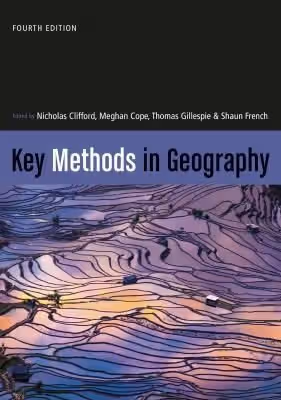
Clifford, N., Cope, M., & Gillespie, T. W. (Eds.). (2023). Key Methods in Geography (4th ed.). SAGE.
Chapter Summary
The fourth edition is an edited volume of about 780 pages. The publisher's contents list gives thirty-nine chapters in five parts, each chapter a self-contained introduction to one method or research task. According to the publisher, nine chapters are new to this edition, among them decolonial methods, the prediction, visualization and modelling of climate and environmental change, and writing up research, and every chapter includes case-study examples, a summary and exercises. Because the chapters are short and independent, the summaries below follow the five parts and use the chapter titles as the publisher gives them.
Part 1: Starting Points and Perspectives
Getting Started in Geographical Research: How This Book Can Help; Health, Safety and Risk in the Field; On Being Ethical in Geographical Research; Identifying and Reviewing the Key Literature for Your Assignment; Effective Research Communication; Fundamentals of Mapping and GIS; Decolonial Methods.
The opening part covers what every project needs before data collection begins: how to use the book, fieldwork safety and risk, research ethics, finding and reviewing literature, and communicating results. It also places two cross-cutting chapters here, an introduction to mapping and GIS and a chapter on decolonial methods, so that questions of representation and positionality are raised at the start rather than at the end.
Part 2: Exploring Human and More-Than-Human Geographies
Historical and Archival Research; Conducting Questionnaire Surveys; Semi-Structured Interviews and Focus Groups; Respondent Diaries; Participant Observation; Researching Affect and Emotion; More-Than-Human Research Methodologies; Textual Analysis; Interpreting the Visual; Using Digital Social Data in Geographic Research; GeoHumanities and Creative Research Methods; Critical GIS; Quantitative Modelling in Human Geography.
The longest part covers methods for human geography. It runs from established ways of producing data (archives, questionnaires, interviews and focus groups, diaries, participant observation) to newer fields (affect and emotion, research with non-human actors, digital social data, creative and GeoHumanities approaches), and to interpretive methods for texts and images. It closes with two contrasting computational chapters, critical GIS and quantitative modelling.
Part 3: Exploring the Physical Environment
Making Observations and Measurements in the Field; Uncrewed Aircraft Systems (UAS) for Predicting, Visualizing, and Modelling Environmental Change; Getting Information from the Past: Palaeoecological Studies of Terrestrial Ecosystems; Numerical Modelling: Understanding Explanation and Prediction in Physical Geography; Simulation and Reduced Complexity Models; Remote Sensing and Satellite Earth Observation; Digital Terrain Analysis; Environmental GIS; Models and Data in Biogeography and Landscape Ecology; Environment and Sustainability: Environmental Auditing, Impact Assessment and Valuation.
The physical geography part moves from field observation and measurement to data from drones and satellites, palaeoecological reconstruction, terrain analysis and environmental GIS, and then to modelling, with separate chapters on numerical models and on simulation and reduced-complexity models. Biogeography and environmental assessment close the part.
Part 4: Geographical Analysis: Interpreting, Visualising, and Representing Geographical Data
Making Use of Secondary Data; Using Statistics to Describe and Explore Spatial Data; Exploring and Presenting Quantitative Data; Case Study Methodology; Making Sense of Qualitative Data: Coding, Organizing, and Analyzing; Video, Audio and Technology-Based Applications; Writing: An Embodied Spatial Practice of Scholarly Sharing.
This part turns from collecting data to working with it: secondary sources, descriptive and exploratory spatial statistics, presenting quantitative results, case-study design, coding qualitative material, audio-visual and technology-based tools, and a new chapter that treats writing as part of research practice.
Part 5: Perspectives on Research in Practice
Encountering the Digital in Human Geography Research; Doing Engaged Scholarship: Why Methods Matter.
Two reflective chapters end the book, one on how digital technologies change human geography research and one on engaged scholarship and why choice of method matters for research done with and for communities.
Key Concepts
Parts 1 and 5: Framing research
- Research ethics and risk: ethical review and safety planning as part of research design, not an afterthought.
- Literature review: locating a project within existing work before collecting data.
- Decolonial methods: questioning whose knowledge and which places research privileges, and how methods can reproduce or challenge those patterns.
- Engaged scholarship: research conducted with and for communities, where methods shape the relationship.
Part 2: Human and more-than-human geographies
- Qualitative data production: interviews, focus groups, diaries and participant observation as ways of generating rather than simply collecting data.
- More-than-human research: approaches that include animals, objects and environments as participants in social life.
- Critical GIS: using and questioning GIS with attention to power and representation.
Parts 3 and 4: Physical environment and analysis
- Field measurement: designing observations so that they can answer a research question.
- Remote sensing and UAS: collecting environmental data from satellites and drones.
- Numerical and reduced-complexity models: two ways of simulating environmental systems, differing in how much process detail they include.
- Spatial statistics: describing and exploring patterns in geographical data.
- Qualitative coding: organizing and interpreting textual or interview material.
Critical Analysis
Strengths
- Human and physical geography together. The book covers qualitative, quantitative, spatial and modelling methods across both halves of the discipline, so one volume can support a department-wide methods module or a dissertation in either field.
- Built for students starting their own research. The publisher aims it at students taking a geography methods module or starting independent research; the first part deals with practical starting points (safety, ethics, literature, communication), and each chapter has case-study examples, a summary and exercises. Stephen Tooth (Aberystwyth University), in an endorsement quoted by the publisher, recommends it particularly to final-year undergraduates doing dissertation or project work.
- Up to date in range. New chapters on decolonial methods, drones for environmental change, and writing, together with chapters on digital social data, critical GIS, affect and more-than-human research, reflect current debates as well as established techniques.
- Short, independent chapters. Each method has its own chapter by different contributors, so students can read only the ones their project needs.
Limitations
- Breadth over depth. With roughly forty chapters in about 780 pages, each method receives a chapter-length introduction. Students applying a technique, for example spatial statistics or numerical modelling, will need a specialist text or software guide.
- Placement of some chapters. The five-part structure puts some chapters where students may not look for them: mapping and GIS appears among the starting points, and critical GIS and quantitative modelling sit in the human geography part rather than with the analysis chapters of Part 4. Reading the full contents list before choosing chapters avoids missing them.
- Fast-moving areas. Tooth's endorsement notes that artificial intelligence appears only in the index and that the book does not cover recent generative-AI developments, a gap students using such tools should keep in mind.
Where It Fits in the Course
In the geographic thought and methods list, this is the practical handbook. Gomez and Jones's Research Methods in Geography: A Critical Introduction is a shorter edited textbook that sets philosophical positions alongside data methods and is a gentler first course; Key Methods takes over when students need a chapter on a specific technique for their own project. Matthews and Herbert's Geography: A Very Short Introduction is a quick orientation to the discipline as a whole.
The thought books explain why geographers choose the methods they do. Cresswell's Geographic Thought: A Critical Introduction covers the major traditions and is the natural companion when a methods chapter refers to positivism, humanism, feminism or poststructuralism. Johnston and Sidaway's Geography and Geographers is the detailed history of Anglo-American human geography since 1945, and Livingstone's The Geographical Tradition treats the longer history of the discipline as a series of contested episodes; both are context for the debates behind Part 2 and Part 5 rather than practical guides.
How to Use This Book
The book assumes no prior methods training. It is written for students in a methods module or starting a dissertation, and it remains useful as a reference through postgraduate work.
A practical plan:
- Everyone: the opening chapter on how the book can help, then health and safety, ethics, literature review and research communication. Read the decolonial methods chapter early, since it changes how the other chapters can be read.
- Human geography projects: choose two or three Part 2 chapters that match the project (for example interviews and focus groups, participant observation, or questionnaires), then the matching analysis chapter in Part 4 (qualitative coding or exploring quantitative data).
- Physical geography projects: field observation and measurement, then the relevant data-source chapter (remote sensing, UAS, palaeoecology, terrain analysis) and, if the project involves modelling, the numerical-modelling or simulation chapter. Follow with the statistics chapters in Part 4.
- Before writing up: the chapter on writing and the two reflective chapters of Part 5.
Do each chapter's exercises against your own project rather than in the abstract, and use its case-study examples as models for research design. Follow up the chapter references for any method you adopt, since the chapters are introductions rather than manuals.