01 / Reading Guide
Reading Guide
Citation
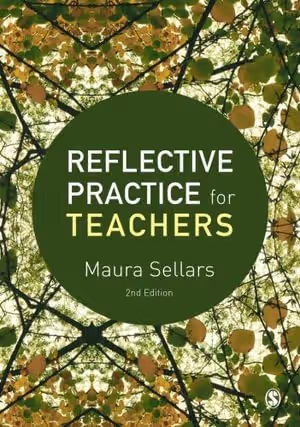
Sellars, M. (2017). Reflective Practice for Teachers (2nd ed.). SAGE Publications.
Chapter Summary
The second edition, about 310 pages, updates a book first published in 2013. Its twelve chapters each take a key issue that student and beginning teachers meet and use it as an occasion for reflection. According to the publisher, every chapter contains case studies and "What does this mean for you?" boxes that take ideas from research and show how they apply in classrooms. The publisher also lists, among the changes, extended discussion of metacognition in the classroom and a critical perspective on what is really known about brain-based learning, without saying which chapters carry them. The author is based at the University of Newcastle in Australia.
Chapters 1–2: Reflective Practice; Teaching as Professional Practice
The opening chapters set out what reflective practice is and frame teaching as a profession. The rest of the book applies reflection to particular topics, so these chapters are the starting point; the publisher notes that this edition covers more models of reflective practice.
Chapter 3: Education in the Twenty-First Century
Places teaching in its present-day context, the setting in which the later chapters' issues arise.
Chapters 4–5: The Learning Process; Teaching for Learning
Two linked chapters, first on how learning happens and then on teaching designed to produce it.
Chapters 6–8: Theories on the Nature of Intelligence; The Importance of Positive Thinking; Self-directed Learning
Three chapters on learners: how intelligence has been theorised, the role of positive thinking, and learners taking charge of their own learning.
Chapters 9–10: Understanding Student Diversity; Skills and Strategies for Differentiation
The first chapter of the pair examines the diversity of students in a class; the second turns to the skills and strategies teachers use to differentiate their teaching for it.
Chapter 11: Evaluation
Concerns evaluation; the publisher describes a new chapter on assessment in this edition, which one reviewer quoted by the publisher links to recent changes in requirements.
Chapter 12: Beginning Your Teaching Career
The book ends with the move into the profession.
Key Concepts
Chapters 1–3: Reflection and the profession
- Reflective practice: systematically examining one's own beliefs and teaching in order to improve them, the method of the whole book.
- Models of reflective practice: structured frameworks for reflection, which this edition covers more fully.
Chapters 4–8: Learning and learners
- Theories of intelligence: competing accounts of what intelligence is, with implications for how teachers view learners.
- Self-directed learning: learners taking responsibility for planning and managing their own learning.
Chapters 9–12: Diversity, differentiation, evaluation and career
- Student diversity: the range of learners' backgrounds and needs in one class.
- Differentiation: adapting teaching to that range.
- Evaluation: judging learning and teaching, including assessment.
Additions in the second edition
- Metacognition: awareness and control of one's own thinking and learning, discussed at greater length in this edition.
- Brain-based learning: claims about teaching derived from neuroscience, which the book examines critically.
Critical Analysis
Strengths
- Reflection tied to real topics. Rather than treating reflection in the abstract, each chapter applies it to a substantive issue in teaching, from intelligence to differentiation, and its case studies and "What does this mean for you?" boxes ask readers to apply research to their own practice.
- Useful for seminars. Dianne Toe of Deakin University, quoted by the publisher, singles out the book's scenarios as conversation starters for seminars with final-year preservice teachers and welcomes the additional ones in this edition.
- Accessible to beginners, still useful to experienced teachers. Deborah Gonzalez, writing for the Chartered College of Teaching (quoted by the publisher), notes that the approach assumes little prior knowledge but is informative and affirming for experienced educators, and that its use of current and established research suits school leaders who support reflective practice.
- Critical on fashionable claims. The publisher highlights a critical perspective on brain-based learning, a useful corrective for new teachers who meet such claims in schools.
Limitations
- Breadth over depth. Twelve wide topics, from intelligence theory to career entry, in about 310 pages means each receives an introductory treatment; students writing on any one topic will need specialist reading.
- Context. The author works in Australia, and the edition dates from 2017; readers elsewhere, and later, should check its discussion of assessment and professional requirements against their own system's current rules.
Where It Fits in the Course
Sellars is organised around classroom topics rather than around a theory of reflection, which makes it a natural first text for trainee teachers in this course. Stephen Brookfield's Becoming a Critically Reflective Teacher is the closest companion: also accessible, but focused on critical reflection as a habit of checking assumptions about learning and classroom power against evidence from students, colleagues, research and experience. Reading Brookfield after Sellars adds a more critical edge to the reflection Sellars introduces.
Donald Schön's The Reflective Practitioner is the classic study behind the vocabulary of reflection-in-action and reflection-on-action, worth reading for the theory once the practical idea is familiar. Parker Palmer's The Courage to Teach explores the teacher's inner life, John Hattie's Visible Learning for Teachers offers an evidence-focused route to evaluating one's impact that complements Sellars's chapters on learning and evaluation, and Cochran-Smith and Lytle's Inquiry as Stance treats practitioner research as a career-long stance, suited to postgraduate study.
How to Use This Book
The book is aimed at student teachers in their preparation and teachers in their first years in the classroom; reviewers quoted by the publisher also recommend it to experienced teachers and to mentors and teacher educators running seminars.
A suggested approach:
- Start with Chapters 1 and 2, which introduce reflective practice itself.
- On placement, read the chapter that matches your current challenge, such as Chapters 9 and 10 when planning for a mixed class or Chapter 11 when preparing assessments, and work through its case studies and "What does this mean for you?" boxes against a recent lesson.
- Before job applications, read Chapter 12.
Keep a reflective journal organised by the book's chapters, and use the case studies for discussion with a mentor or peer group. When a topic matters for an assignment, follow the research the chapter cites, and pair the book with Brookfield or Schön for a deeper account of reflection itself.