01 / Reading Guide
Reading Guide
Citation
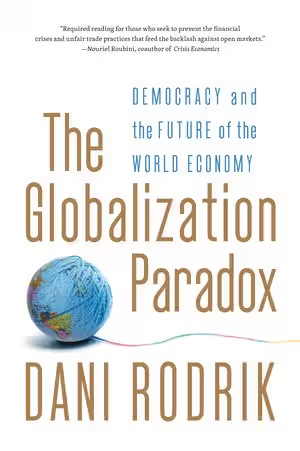
Rodrik, D. (2012). The Globalization Paradox: Democracy and the Future of the World Economy. W. W. Norton & Company.
Chapter Summary
The book has twelve chapters and a closing "Bedtime Story for Grownups", followed by notes and an index; the main text runs to about 280 pages. (The same book appeared from Oxford University Press in 2011 under the subtitle Why Global Markets, States, and Democracy Can't Coexist.) It is an argued essay rather than a textbook. The publishers' descriptions summarise the thesis: we cannot pursue democracy, national self-determination and full economic globalization all at once; when the social arrangements of democracies clash with the demands of global markets, national priorities should take precedence, and the world economy should rest on a light frame of international rules that leaves room for national variety. The chapters move from history (Chapters 1–4) through finance and development (5–8) to the trilemma and its implications (9–12).
Chapter 1: Globalization in History's Mirror
The book begins with the early history of globalization. The publisher's description says the story starts with the mercantile monopolies of seventeenth-century empires, and the Hudson's Bay Company appears among the book's terms; the chapter uses that history as a mirror for the present.
Chapter 2: The Rise and Fall of the First Great Globalization
The nineteenth-century world economy under the gold standard, its achievements and its collapse, which the descriptions present as one of the successive narratives that underpinned globalization.
Chapter 3: Why Doesn't Everyone Get the Case for Free Trade?
Here Rodrik takes up the economic case for free trade and asks why it fails to persuade many people.
Chapter 4: Trade in a Politicized World
The postwar trade regime. Bretton Woods, the GATT and multilateralism are among the book's prominent terms, and the publisher's description names the WTO among the institutions through which nations have tried to harness globalization; the title stresses that trade rules are made in a political world.
Chapters 5–6: Financial Globalization Follies; The Foxes and Hedgehogs of Finance
Two chapters on capital mobility and financial crises. The book's terms include capital controls, the Asian financial crisis and Argentina, and the Foreign Affairs comment quoted by the publisher notes that Rodrik takes aim at the desire to liberalise capital movements fully.
Chapters 7–8: Poor Countries in a Rich World; Trade Fundamentalism in the Tropics
The development chapters ask how poor countries have fared in a globalized economy; the title of Chapter 8 signals a critique of "trade fundamentalism", and the publisher's description names the Washington Consensus among the narratives that brought both great success and great failure. Industrial policies, China, South Korea and India appear among the book's terms.
Chapter 9: The Political Trilemma of the World Economy
The analytical centre of the book. Deep economic integration, national self-determination and democratic politics cannot all be pursued at once. The OUP description puts the consequences bluntly: too much power for governments yields protectionism, too much freedom for markets yields an unstable world economy with little social and political support.
Chapters 10–12: Is Global Governance Feasible? Is It Desirable?; Designing Capitalism 3.0; A Sane Globalization
The final chapters draw the implications. Chapter 10 asks whether global governance could replace national control and whether it should; Chapter 11 sets out a design for the next phase of capitalism; Chapter 12 makes the case for what the descriptions call smart rather than maximum globalization, with national room for manoeuvre inside light international rules. The book closes with "A Bedtime Story for Grownups".
Key Concepts
Chapters 1–4: History and Trade
- The nation-state: the political unit whose importance, in the publisher's words, Rodrik reminds readers of.
- Gold standard and Bretton Woods: two historical regimes for organising the world economy, each with its own narrative of how globalization should work.
- The case for free trade: the economist's argument for trade, and the reasons it fails to persuade.
Chapters 5–8: Finance and Development
- Financial globalization: free movement of capital across borders, and the crises associated with it.
- Capital controls: limits on cross-border capital flows, a recurring term in the book's discussion of financial globalization.
- Washington Consensus: the liberalising policy package for developing countries, one of the narratives the book examines.
- Industrial policy: government promotion of particular sectors, a recurring term in the development chapters.
Chapters 9–12: The Trilemma and Its Implications
- Political trilemma: hyperglobalization, national sovereignty and democracy cannot all be achieved at once.
- Hyperglobalization: deep economic integration that removes national barriers to trade and finance.
- Global governance: the alternative of moving rule-making to the international level, assessed for feasibility and desirability.
- Smart globalization: a world economy with light international rules and room for national differences.
Critical Analysis
Strengths
- A clear, memorable framework. The trilemma gives students a single idea with which to organise debates about trade agreements, capital controls and international institutions, and the book builds up to it through history rather than asserting it.
- History joined to economics. The chapters on mercantile companies, the gold standard and Bretton Woods trace the arrangements and narratives on which successive eras of globalization rested.
- Readable for non-specialists. The publishers stress its combination of history, humour and good-natured critique; the Foreign Affairs comment quoted by Norton calls it cogent and well written.
- Written from inside the discipline. The OUP author note describes Rodrik's influential work on trade, industry, finance and growth policy and his earlier book Has Globalization Gone Too Far?; the critique is an economist's, not an outsider's.
Limitations
- An argument, not a survey. The book argues for a particular view of globalization and should be read as such. Published responses, such as Joel Trachtman's review essay "The Antiglobalisation Paradox" in The World Economy and the symposium with Rosa Lastra and Robert Howse in the International Journal of Constitutional Law (to which Rodrik replied), show that its claims are contested.
- Written before recent shocks. The book appeared in 2011; later developments in trade policy, the politics of globalization and global supply chains are not covered.
- An essay, not a textbook. Students need a textbook for the trade and open-economy models behind its arguments.
Where It Fits in the Course
This is the essay on the reading list for the international economics course: the book to read for the questions behind the models. The core textbooks teach the theory. Feenstra and Taylor's Essentials of International Economics is a one-semester text built around data and policy episodes; Krugman, Obstfeld and Melitz's International Economics: Theory and Policy covers trade, trade policy and international finance; Salvatore and Hepp's International Economics is a comprehensive alternative with mathematical appendices. Rodrik's Chapters 3–4 accompany the textbooks' trade-policy chapters, and Chapters 5–6 their material on capital flows and exchange rates.
Robert Feenstra's Advanced International Trade and Uribe and Schmitt-Grohé's Open Economy Macroeconomics are graduate texts on trade theory and evidence and on open-economy macroeconomic models; Rodrik's arguments about capital mobility and crises in emerging markets give useful context for the latter.
How to Use This Book
No technical background is needed; an introductory economics course helps with comparative advantage and capital flows.
- Read Chapter 9 early. The trilemma is the key to the book; reading it after Chapter 1 makes the historical chapters easier to follow.
- Core: Chapters 2–6 and 9 carry the main argument about trade and finance. Chapters 7–8 are essential for students of development.
- For essays: Chapters 10–12 set out the policy proposals; for each, write down which corner of the trilemma it gives up.
- Read critics alongside. Pair the book with a published response, such as Trachtman's review essay, and with the textbook's treatment of the gains from trade.
As a course companion, read it alongside the trade-policy and international-finance parts of the main textbook rather than at the end.