01 / Reading Guide
Reading Guide
Citation
Feenstra, R. C. (2015). Advanced International Trade: Theory and Evidence (2nd ed.). Princeton University Press.
Chapter Summary
The second edition has twelve chapters and two appendices, about 430 pages before the references and index (496 pages in all). The publisher describes it as a graduate textbook that integrates current theory with empirical evidence, with theoretical and empirical exercises supplementing each chapter; the empirical exercises are posted on the author's website. It adds a new chapter on monopolistic competition with heterogeneous firms.
Chapter 1: Preliminaries: Two-Sector Models
The chapter reviews the two workhorse models that the rest of the book relies on. It starts with the Ricardian model with two goods and one factor, showing that the pattern of trade follows comparative advantage while wages reflect absolute advantage. It then develops the two-good, two-factor model with constant returns to scale: the GDP function, the equilibrium conditions, the determination of factor prices, the effect of changes in product prices (the Stolper–Samuelson theorem), the effect of changes in endowments (the Rybczynski theorem, illustrated by the "Dutch disease"), factor price equalization and factor intensity reversals. An appendix presents the Lerner diagram. The chapter closes by noting that it is the only one without accompanying empirical evidence, and it points to Chapters 2–4 for tests.
Chapters 2–4: The Heckscher–Ohlin Model; Many Goods and Factors; Trade in Intermediate Inputs and Wages
Chapter 2 turns the two-by-two model into the Heckscher–Ohlin model of trade between countries and presents evidence on the pattern of trade. Chapter 3 examines many goods and factors in greater detail, asking whether the Stolper–Samuelson and Rybczynski results generalize and how they can be estimated; it also covers the Ricardian model with a continuum of goods and the specific-factors model. Chapter 4 examines evidence on the relationship between product prices and wages in a model that allows trade in intermediate inputs.
Chapters 5–7: Monopolistic Competition and the Gravity Equation I and II; Gains from Trade and Regional Agreements
Chapters 5 and 6 bring in increasing returns and imperfect competition, linking monopolistic competition to the gravity equation of bilateral trade. Chapter 7 turns to the gains from trade and regional trade agreements.
Chapters 8–10: Import Tariffs and Dumping; Import Quotas and Export Subsidies; Political Economy of Trade Policy
These three chapters cover trade policy: tariffs, quotas, export subsidies and other instruments, and the political economy of why policy is chosen. The publisher's description adds that the book also presents some important results that had not yet been published.
Chapters 11–12: Trade and Endogenous Growth; Multinationals and Organization of the Firm
Chapter 11 connects trade with endogenous growth. Chapter 12 covers multinational firms and the organization of the firm in international trade.
Appendices A and B: Price, Productivity, and Terms of Trade Indexes; Discrete Choice Models
Two appendices describe methods for international trade research: index numbers for prices, productivity and the terms of trade, and discrete choice models.
Key Concepts
Chapter 1
- Comparative and absolute advantage: comparative advantage determines trade patterns; absolute advantage determines the wage level.
- Stolper–Samuelson and Rybczynski theorems: how factor prices respond to product prices and how outputs respond to endowments in the two-by-two model.
- Factor price equalization and factor intensity reversals: the conditions under which trade equalizes factor prices, and the case that breaks them.
Chapters 2–7
- Heckscher–Ohlin model: trade driven by differences in factor endowments.
- Gravity equation: bilateral trade as a function of country size and trade costs, tied to monopolistic competition.
- Heterogeneous firms: differences in productivity across firms within an industry.
Chapters 8–12 and Appendices
- Tariffs, quotas and export subsidies: instruments of trade policy.
- Political economy of trade policy: the interest-group side of tariff choice.
- Multinationals and the organization of the firm: where and how firms produce abroad.
- Discrete choice models: econometric tools used in trade research.
Critical Analysis
Strengths
- Theory paired with evidence. The publisher presents the book as integrating current theoretical approaches with empirical evidence, and the conclusion of Chapter 1 notes that it is the only chapter without accompanying empirical evidence. Appendix B on discrete choice models and Appendix A on index numbers supply tools used in that work.
- A careful base model. The first chapter takes the two-sector models in detail, with both equations and diagrams, and treats the dual determination of factor prices through unit-cost functions. It treats the two-by-two model as essential for the chapters that follow.
- Exercises of two kinds. Each chapter carries theoretical and empirical exercises, with empirical exercises available on the author's website.
- Breadth. The topics run from Ricardo and Heckscher–Ohlin to heterogeneous firms, offshoring, multinationals and endogenous growth.
Limitations
- Graduate-level prerequisites. Chapter 1 describes its Ricardian treatment as a review of undergraduate material and then proceeds quickly to the two-by-two model, which means the book expects graduate microeconomics and calculus.
- Trade only. The book is about trade theory and trade evidence; the macroeconomic and financial side of international economics is not in the table of contents.
- Dated in places. The second edition appeared in 2015; work published after 2015 is not covered.
Where It Fits in the Course
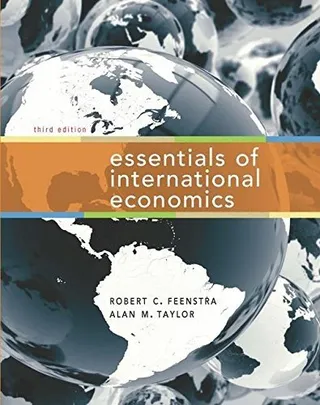
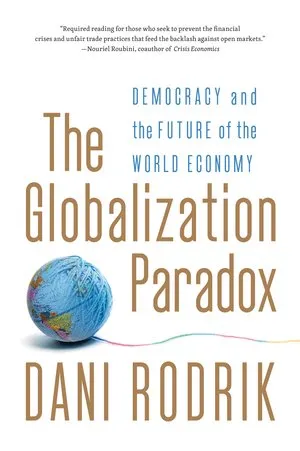
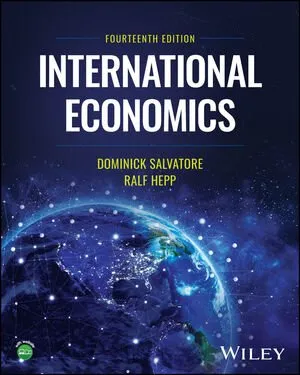
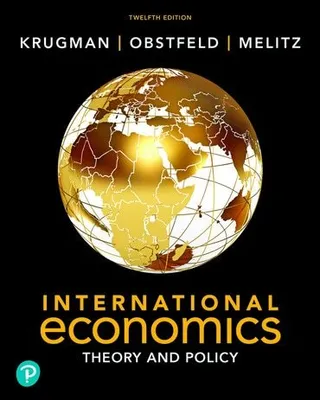
The other books in this course are mostly broader or more elementary. Feenstra and Taylor's Essentials of International Economics is a one-semester undergraduate text covering both trade and international macroeconomics; Salvatore and Hepp, and Krugman, Obstfeld and Melitz, are undergraduate texts that also cover both halves of the field; Rodrik's The Globalization Paradox is a readable account of the economics and politics of globalisation. Uribe and Schmitt-Grohé's Open Economy Macroeconomics is a graduate text on the macroeconomic side.
Feenstra's book is the graduate trade-theory text in the list. Read it after an undergraduate international economics course and graduate microeconomics, and pair it with Uribe and Schmitt-Grohé if a course also covers open-economy macroeconomics.
How to Use This Book
The book is aimed at graduate students preparing to do research in international trade, and at economists who need a systematic account of trade models and how they are tested. Expect to need graduate microeconomic theory, multivariable calculus and some econometrics.
A practical plan:
- Core: Chapters 1–3 (the two-sector models, Heckscher–Ohlin, many goods and factors) and Chapters 5–6 (monopolistic competition and the gravity equation).
- Next: Chapter 4 (intermediate inputs and wages), Chapter 7 (gains from trade) and Chapter 12 (multinationals and the firm).
- Policy and growth: Chapters 8–10 for trade policy and Chapter 11 for growth, as the course requires.
Do the problems at the end of each chapter, including the empirical exercises from the author's website, and consult Appendices A and B when index numbers or discrete choice models arise.