01 / Reading Guide
Reading Guide
Citation
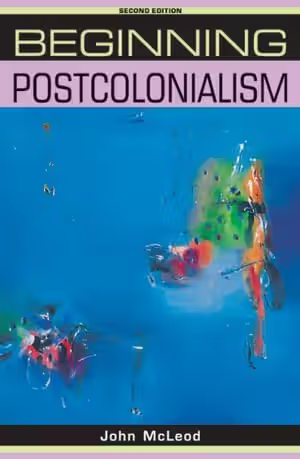
McLeod, J. (2010). Beginning Postcolonialism (2nd ed.). Manchester University Press. Beginnings series.
Chapter Summary
The second edition, in Manchester University Press's Beginnings series, runs to about 350 pages: a preface to the second edition, an introduction, eight chapters, an appendix reprinting Rudyard Kipling's poem "The Overland Mail (Foot-service to the Hills)", a further reading section and an index. The publisher describes it as written for students taking undergraduate courses in postcolonial studies for the first time, presenting the field's major areas of concern "in a clear, accessible and organised fashion". It gives an overview of how postcolonialism emerged as a discipline, examines its established critical approaches and recent initiatives, and shows how key ideas can be applied when reading texts, with the stated aim of helping students think independently about "the possibilities and pitfalls of postcolonial critique".
Introduction
The introduction opens the book for readers new to the field; the publisher notes that the variety of approaches and critical vocabularies can make it hard for new students to find a foothold.
Chapter 1: From 'Commonwealth' to 'Postcolonial'
As the title indicates, the first chapter traces the emergence of the discipline, from the study of "Commonwealth" literature to postcolonial studies, matching the publisher's promise of an overview of how postcolonialism became a field.
Chapter 2: Reading colonial discourses
The chapter turns to colonial discourse: the ways colonial power was represented and justified in writing, and how such texts can be read. The Kipling poem printed as an appendix gives readers a colonial-era text to practise on.
Chapters 3–4: Nationalist representations; The nation in question
Two chapters on the nation, a central concern of postcolonial writing and criticism. The first takes up nationalist representations; the second, as its title suggests, puts the idea of the nation itself in question, so the pair moves from nationalism to a critique of it.
Chapter 5: Re-reading and re-writing English literature
This chapter addresses canonical English literature from a postcolonial perspective, both critical re-readings of earlier works and later writing that rewrites them.
Chapter 6: Postcolonialism and feminism
The chapter examines the relationship between postcolonial and feminist criticism.
Chapter 7: Diaspora identities
Here the focus moves to migration and the identities of diaspora communities.
Chapter 8: The limits of postcolonialism?
The final chapter, framed as a question, considers the limits of the field, in keeping with the book's stated aim of exposing students to the pitfalls as well as the possibilities of postcolonial critique.
Key Concepts
Introduction and Chapters 1–2
- Postcolonialism: a field of literary and cultural studies whose emergence as a discipline the book traces.
- Commonwealth literature: the earlier frame for studying writing from former British colonies, which the first chapter sets against "postcolonial".
- Colonial discourse: the language and representations through which colonialism was expressed and justified.
Chapters 3–5
- Nationalist representation: the ways nationalism represents the nation and its people.
- Questioning the nation: critical scrutiny of the nation as a framework for postcolonial writing.
- Re-reading and re-writing: rereading the English canon and writing back to it.
Chapters 6–8
- Postcolonialism and feminism: the meeting point of two critical traditions.
- Diaspora: communities and identities formed by migration away from a homeland.
- Limits of postcolonialism: the debates over what the field cannot do or explain.
Critical Analysis
Strengths
- Written for newcomers to the field. The publisher pitches the book at undergraduates meeting postcolonial studies for the first time and stresses clarity and organisation; the Beginnings series is designed for this purpose.
- Theory joined to reading. The publisher emphasises that the book shows how postcolonial ideas can be applied to texts, and the appendix provides a short colonial poem for exactly this kind of practice.
- A coherent sequence. The chapter titles move from the history of the discipline, through colonial discourse and the nation, to the canon, gender and diaspora, and end with a question about the field's limits, which gives a clear order for a course.
- Encourages independent judgment. The book's description presents its purpose as enabling students to develop their own thinking about postcolonial critique, not to accept a single position.
Limitations
- A 2010 edition. The second edition is the current one listed here and appeared in 2010, so later debates in the field fall outside it.
- Breadth over depth. Eight chapters cover a large field, so each topic (the nation, feminism, diaspora) receives one chapter, and students writing on a particular area will need more specialised studies.
- An introduction, not an anthology. The book contains only one primary text (the Kipling poem), so the literary and theoretical works it discusses have to be read separately.
Where It Fits in the Course
In the postcolonial and ethnic literature course, McLeod is the first book to read: a guide to the field's history, concepts and debates. Elleke Boehmer's Colonial and Postcolonial Literature: Migrant Metaphors is the natural next step, a critical and historical account of writing in English from the literature of empire to postcolonial fiction and poetry, with close readings. The Empire Writes Back by Bill Ashcroft, Gareth Griffiths and Helen Tiffin and Edward Said's Culture and Imperialism are foundational theoretical works that McLeod's chapters prepare for: Said's contrapuntal reading of canonical texts relates directly to the chapter on re-reading English literature. Gloria Anzaldúa's Borderlands/La Frontera and Monique Truong's The Book of Salt are primary works to which the chapters on nationalism, feminism and diaspora can be applied.
How to Use This Book
The book suits undergraduates beginning postcolonial studies and readers who want a structured introduction; no previous study of postcolonial theory is assumed.
- Read in order at first. The chapters build from the history of the discipline to its debates, so the introduction and Chapters 1–2 are best read before the rest.
- Practise with the appendix. Read the Kipling poem after Chapter 2 and try out the approaches to colonial discourse on it.
- Pair chapters with texts. Read Chapters 3–4 alongside a novel concerned with the nation, Chapter 5 alongside a canonical English text and a postcolonial rewriting of it, and Chapters 6–7 alongside Borderlands/La Frontera or The Book of Salt.
- Use the further reading. Follow it into the theorists the book introduces, then move on to Boehmer, Ashcroft, Griffiths and Tiffin, and Said.
- Finish with Chapter 8. Return to the question of the field's limits at the end of a course, when there is enough material to judge it.