01 / Reading Guide
Reading Guide
Citation
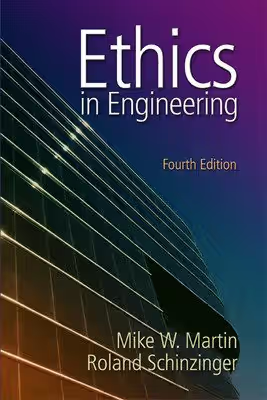
Martin, M. W., & Schinzinger, R. (2005). Ethics in Engineering (4th ed.). McGraw-Hill.
Chapter Summary
The fourth edition is a paperback of about 340 pages (xi + 339) with ten numbered chapters, an appendix and an index. Library catalogues record the contents as Preface; Chapters 1–10; Appendix; Index. The publisher's description, as repeated by Google Books, presents the book as an introduction to the key issues in engineering ethics that takes account of both specific organisational contexts and broader technological trends. It says the text promotes critical thinking and discussion, offers real-world examples and cases, and provides a framework for understanding the ethical dilemmas engineers meet.
Chapters 1–3: Ethics and Professionalism; Moral Reasoning and Codes of Ethics; Moral Frameworks
The opening group moves from the profession to the tools of moral thinking. Chapter 1 pairs ethics with professionalism, Chapter 2 treats moral reasoning together with codes of ethics, and Chapter 3 turns to moral frameworks.
Chapter 4: Engineering as Social Experimentation
The title presents engineering as a form of experimentation carried out in society. As the fourth of ten chapters it sits between the general tools of Chapters 1–3 and the applied chapters that follow.
Chapter 5: Commitment to Safety
The safety chapter; its title speaks of a commitment to safety.
Chapters 6–7: Workplace Responsibilities and Rights; Honesty
Two chapters on the engineer as an employee and as a truth-teller: responsibilities and rights in the workplace, then honesty.
Chapter 8: Environmental Ethics
The environmental obligations of engineers.
Chapter 9: Global Issues
Engineering ethics beyond a single national setting.
Chapter 10: Engineers and Technological Progress
The closing chapter on the engineer's relation to technological change, which corresponds to the broader technological trends mentioned in the publisher's description.
Appendix
A single appendix follows the ten chapters; the catalogue entry does not specify its content.
Key Concepts
Chapters 1–4: foundations
- Professionalism and codes of ethics: the professional setting and the codes that express its standards.
- Moral reasoning and frameworks: ways of structuring ethical arguments.
- Social experimentation: the Chapter 4 view of engineering as experimentation on society.
Chapters 5–7: practice
- Safety: engineers' commitment to safety.
- Workplace responsibilities and rights: what engineers owe and are owed at work.
- Honesty: truthfulness in professional conduct.
Chapters 8–10: wider scope
- Environmental ethics: obligations to the environment.
- Global issues: ethical questions raised by international practice.
- Technological progress: the engineer's role in technological change.
Critical Analysis
Strengths
- A clear arc from theory to practice. The ten chapters move from professionalism and moral reasoning (1–3) through engineering as social experimentation (4) to safety, workplace, honesty, environment, global issues and technological progress (5–10), so the practical chapters can rely on the earlier vocabulary.
- Compact and schedulable. At about 340 pages the book is of a size a single course can read, and each of the ten chapter titles is a topic that can be scheduled directly.
- Stated pedagogical aims. The publisher says the book promotes critical thinking and discussion and offers a framework for understanding ethical dilemmas, and that it brings in real-world examples and cases.
- Dedicated treatment of moral frameworks. A whole chapter (Chapter 3) is given to moral frameworks, in addition to the moral reasoning of Chapter 2.
Limitations
- Date. The edition was published in 2005, so the technological trends and cases it discusses stop at that date.
- Limited room per topic. Ten topics in about 340 pages means that any single theme, such as risk or the environment, gets one chapter; courses that want more on one topic need a further text.
- Frameworks and discussion rather than a procedure. The publisher's summary stresses frameworks, critical thinking and discussion; it does not advertise a step-by-step method of case analysis of the kind some course mates emphasise.
Where It Fits in the Course
Martin and Schinzinger is the philosophically grounded full-length textbook in the engineering ethics list. Fleddermann's Engineering Ethics is more compact, setting out the main ethical theories in plain terms and a structured method for analysing dilemmas through short historical cases; it works well as a first reading before this book. Harris and colleagues' Engineering Ethics: Concepts and Cases is the other full-length textbook and puts more weight on a practical toolkit, professional codes and a large collection of cases. McGinn's The Ethical Engineer concentrates on eighteen case studies organised around four fundamental ethical responsibilities.
For readers who want more philosophy, van de Poel and Royakkers's Ethics, Technology, and Engineering builds analysis from ethical theory and extends into design and new technologies, and the Routledge Handbook of the Philosophy of Engineering is a scholarly reference with fifty-five chapters.
How to Use This Book
The book is meant for courses on engineering ethics, preparing readers, in the publisher's words, for issues they will confront in their careers. No prerequisites are listed; readers should expect to follow sustained argument, and some engineering coursework helps in understanding the cases.
A practical plan for a one-term course:
- Core: Chapters 1–5 in order. Chapters 1–3 supply the vocabulary; Chapters 4 and 5 then take up engineering as social experimentation and the commitment to safety.
- Applications: Chapters 6–7, then 8–10 as the programme requires; Chapters 8 and 9 can be paired with local case material on the environment and international projects.
- Alongside: keep a professional code of ethics from your own discipline at hand when reading Chapter 2, and write a short analysis of one case from the news in each of the applied chapters.
- Discussion: because the publisher describes the book as built for discussion, prepare one question from each chapter before class, and compare how the frameworks of Chapter 3 and the codes of Chapter 2 lead to the same or different answers on the same case.