01 / Reading Guide
Reading Guide
Citation
Romer, D. (2019). Advanced Macroeconomics (5th ed.). McGraw-Hill Education.
Chapter Summary
The fifth edition has thirteen chapters. The publisher describes the book as the standard text and starting point for graduate macroeconomics courses, presenting the major theories of the field's central questions in formal models and supplementing the theory with examples of empirical work that applies and tests it. It says the edition was extensively revised to add new topics and research and to remove inessential material. The chapters can be read in four groups: growth (1–4), short-run fluctuations (5–7), household and firm behaviour and financial markets (8–10), and unemployment and policy (11–13).
Chapters 1–2: The Solow Growth Model; Infinite-Horizon and Overlapping-Generations Models
The book opens with the Solow growth model, the starting point of the growth chapters. Chapter 2 moves to the infinite-horizon and overlapping-generations models.
Chapters 3–4: Endogenous Growth; Cross-Country Income Differences
Chapter 3 treats endogenous growth theory, in which long-run growth is explained within the model. Chapter 4 turns to the question of why incomes differ across countries.
Chapters 5–7: Real-Business-Cycle Theory; Nominal Rigidity; Dynamic Stochastic General-Equilibrium Models of Fluctuations
Chapter 5 presents real-business-cycle theory, which explains fluctuations through real shocks. Chapter 6 introduces nominal rigidity, the departure from flexible prices on which much of short-run macroeconomics rests. Chapter 7 presents dynamic stochastic general-equilibrium models of fluctuations.
Chapters 8–9: Consumption; Investment
These two chapters study household consumption and firm investment, each in partial equilibrium: households divide income between consumption and saving taking asset returns as given (Chapter 8), and firms decide how much to invest taking the valuation of future profits as given (Chapter 9).
Chapter 10: Financial Markets and Financial Crises
Chapter 10 brings saving and investment together in financial markets. Section 10.1 presents a model of perfectly functioning financial markets in general equilibrium. Sections 10.2–10.3 develop agency costs and the financial accelerator, with an empirical application on cash flow and investment. Sections 10.4–10.5 cover mispricing and excess volatility and the evidence on it. Sections 10.6–10.8 treat financial crises: the Diamond–Dybvig model of a self-fulfilling run, contagion, and microeconomic evidence on the effects of crises. The chapter ends with problems. It explicitly leaves aside the broader question of the social value of financial markets.
Chapters 11–13: Unemployment; Monetary Policy; Budget Deficits and Fiscal Policy
Chapter 11 covers unemployment. Chapter 12 addresses monetary policy, and Chapter 13 closes the book with budget deficits and fiscal policy.
Key Concepts
Chapters 1–4: Growth
- Solow model: the neoclassical growth model with exogenous saving and technology.
- Overlapping generations: a dynamic model with finite-lived households.
- Endogenous growth: theories in which growth arises from decisions within the model.
Chapters 5–7: Fluctuations
- Real business cycles: fluctuations driven by real shocks in a flexible-price economy.
- Nominal rigidity: sticky prices or wages as a source of real effects of nominal changes.
- DSGE models: dynamic stochastic general-equilibrium models of fluctuations.
Chapters 8–10: Consumption, Investment and Finance
- Financial accelerator: how agency costs magnify the effects of shocks when the economy is weak.
- Excess volatility: asset prices moving by more than fundamentals warrant.
- Diamond–Dybvig model: self-fulfilling runs on a solvent financial institution.
Chapters 11–13: Unemployment and Policy
- Unemployment, monetary policy and fiscal policy: the topics of the final three chapters.
Critical Analysis
Strengths
- Theory paired with empirical applications. The publisher highlights the pairing of formal models with empirical work, and the sample chapter shows the pattern: three of its sections are labelled "Empirical Application", each placed after a model.
- Clear signposting. The sample chapter opens by saying how it connects to Chapters 8 and 9, lists the four financial-market issues that matter for macroeconomics and states which sections address each.
- Currency. The publisher says the edition was extensively revised for new topics and research, and the chapter on financial crises discusses the 2008 collapse of Lehman Brothers and its aftermath.
- Problems and errata. Chapters end with problems, and the author maintains an errata list covering the fifth edition (last dated April 2021).
Limitations
- Demanding prerequisites. The book is a graduate starting text whose models are formal, as the sample chapter shows, so readers need real mathematical fluency.
- Selective scope. Thirteen chapters cover growth, fluctuations, finance, unemployment and policy, and the chapter on financial markets explicitly sets aside some questions, such as the social value of financial markets; other topics need other sources.
- Known errors in printings. The author's errata list corrects errors in the text and equations, for example on pages 105, 358, 492, 494, 518, 689 and 690, so readers should check which printing they hold.
Where It Fits in the Course
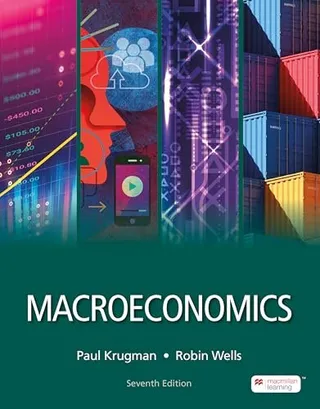
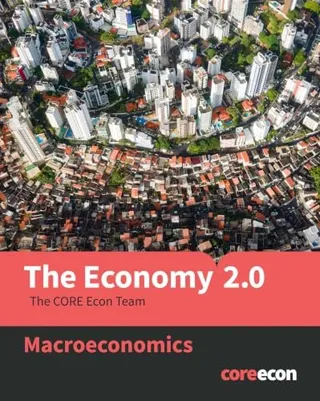
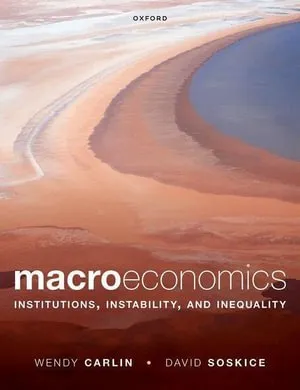
Most books in this course are shorter or more elementary. Krugman and Wells and the CORE team's The Economy 2.0 are introductory texts that build understanding from stories and data; Mankiw's Macroeconomics is the foundational undergraduate text on national income, growth, unemployment, inflation and fluctuations; Carlin and Soskice's Macroeconomics builds an undergraduate treatment around a three-equation model of output, inflation and policy rules.
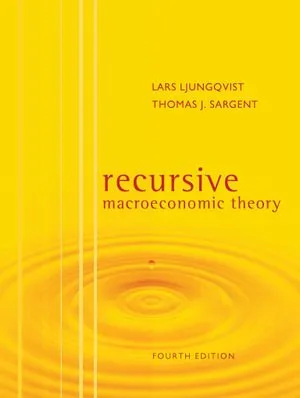
Romer is the graduate step above these, covering the same fields in formal models. Ljungqvist and Sargent's Recursive Macroeconomic Theory is the other graduate text in the list, concentrating on recursive methods and dynamic programming; it is a natural companion for the technical side of dynamic models. The usual order is an undergraduate text, then Romer, then Ljungqvist and Sargent.
How to Use This Book
The book is meant for first-year doctoral and advanced master's students in economics who want to read current research. The listed background is intermediate macroeconomics, multivariable calculus and basic differential equations.
A practical plan:
- Core: Chapters 1–2 (growth and dynamic models), Chapters 5–7 (business cycles and nominal rigidity) and Chapters 8–9 (consumption and investment).
- Next: Chapters 3–4 for growth theory and empirics; Chapter 10 for finance and crises; Chapters 11–13 for unemployment, monetary policy and fiscal policy.
Work the problems at the end of each chapter, read the empirical applications as models of how theory is tested, and check the author's errata list for the printing you hold.