01 / Reading Guide
Reading Guide
Citation
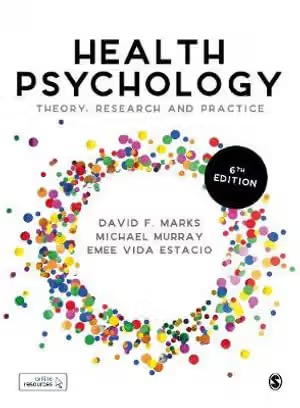
Marks, D. F., Murray, M., & Estacio, E. V. (2021). Health Psychology: Theory, Research and Practice (6th ed.). SAGE Publications.
Chapter Summary
The sixth edition has 24 chapters. According to the publisher, the authors take a holistic approach, giving equal weight to the biological, psychological and social factors that affect health behaviour, culture and change. The text is described as an accessible and comprehensive introduction, and the edition adds a brand new chapter on stress. The chapters fall into four natural stretches, which the groups below follow: foundations and methods, behaviour and behaviour change, prevention and promotion, and the experience of illness and care.
Chapters 1–3: Health Psychology: An Introduction; The Nervous, Endocrine and Immune Systems and the Principle of Homeostasis; Genetics, Epigenetics and Early Life Development
The opening chapter introduces the field; the next two give the biological base, from the body's regulatory systems to genetics, epigenetics and early life.
Chapters 4–6: Macro-social Influences; Social Justice; Culture and Health
Three chapters on the social context of health. Their titles place social structure, justice and culture alongside the biology that comes first, which is the book's most distinctive emphasis. The publisher's study site lists case studies for several of these chapters.
Chapter 7: An A–Z of Research Methods and Issues Relevant to Health Psychology
A methods chapter that, as its title says, is an A–Z of research methods and issues relevant to health psychology. It closes the opening group and supports the evaluation of evidence in the later chapters.
Chapters 8–13: Theories, Models and Interventions for Health Behaviour Change; Sexual Health; Food, Eating and Obesity; Alcohol and Drinking; Tobacco and Smoking; Physical Activity and Exercise
Chapter 8 sets out theories, models and interventions for changing health behaviour. Chapters 9–13 then apply them to particular behaviours: sexual health, eating, alcohol, smoking and physical activity.
Chapters 14–17: Information, Communication and Health Literacy; Screening and Immunization; Health Promotion; Stress and Disease Prevention
Chapters on how information reaches the public, on screening and immunisation, on promoting health, and, in the new chapter, on stress and the prevention of disease.
Chapters 18–24: Illness and Personality; Pain and Pain Control; Cancer; Coronary Heart Disease; HIV Infection and AIDS: The Pinnacle of Stigma and Victim Blaming; Long-term Conditions: Diabetes and ME/CFS; End-of-Life Care, Dying and Death
The last group moves from healthy behaviour to illness. It begins with personality and illness and with pain, and then takes particular conditions: cancer, coronary heart disease, HIV and AIDS (the title frames stigma and victim blaming), diabetes and ME/CFS. The book closes with end-of-life care, dying and death.
Key Concepts
Chapters 1–7: Foundations
- Biological systems and homeostasis: the nervous, endocrine and immune systems and the principle that keeps them in balance.
- Genetics and epigenetics: biological influences set in the context of early life.
- Social justice and macro-social influences: health as shaped by social structure.
- Culture and health: how culture enters health and illness.
Chapters 8–17: Behaviour, prevention and promotion
- Health behaviour change: the theories, models and interventions for it.
- Health literacy: the ability to obtain and use health information.
- Screening, immunisation and health promotion: public health practices from a psychological point of view.
- Stress and disease prevention: the new chapter in this edition.
Chapters 18–24: Illness and care
- Pain and pain control.
- Stigma and victim blaming in HIV and AIDS.
- Long-term conditions, here diabetes and ME/CFS.
- End-of-life care, dying and death.
Critical Analysis
Strengths
- Biological, psychological and social factors with equal weight. The publisher states this as the book's approach, and the contents bear it out: three chapters on social context follow two on biology, and individual behaviours are placed within that frame.
- Attention to critical appraisal and policy. The publisher says the book gives students the tools to evaluate and critically appraise theory and research before it is applied, and emphasises real-world application, showing how theory learnt in the classroom influences public policy.
- Breadth of topics. Twenty-four chapters cover health behaviours, prevention, and conditions from cancer and heart disease to HIV, diabetes, ME/CFS and dying.
- Student resources. The publisher's study site provides learning objectives, video links, multiple-choice questions and flashcards for each chapter and case studies for some, and the publisher describes case studies from across the world.
Limitations
- Size. With 24 chapters and about 700 pages, a single semester must select chapters; the behaviour and condition chapters are the natural ones to choose among.
- Broad scope. Covering biology, society, methods, behaviour and many conditions in one volume means each topic gets a chapter-length treatment; readers wanting a clinical or a research-level account of one condition will need further sources.
- Methods in one chapter. The contents give research methods a single "A–Z" chapter, so a methods text is needed for design and statistics.
Where It Fits in the Course
This is the broad, socially oriented core text among the health and positive psychology books. Stanton and Taylor's Health Psychology is the other long-established undergraduate textbook, covering health-promoting and health-compromising behaviours, stress and coping, the use of health services, the patient-provider relationship and the management of chronic and terminal illness. The two books overlap on behaviour, stress and illness; Marks, Murray and Estacio's contents add separate chapters on macro-social influences, social justice and culture, and on individual conditions such as cancer, coronary heart disease, HIV and AIDS, and diabetes and ME/CFS.
The other books in the list are of different kinds. Pedrotti and colleagues' Positive Psychology is a research-based textbook on well-being and strengths; Haidt's The Happiness Hypothesis, Dolan's Happiness by Design and Epel's The Stress Prescription are general-audience books, the last a seven-day programme on stress. They can accompany Chapter 17 on stress or give a lighter introduction before the textbook, but they are not substitutes for it.
How to Use This Book
The book is aimed at undergraduates; an introductory psychology course is the natural preparation, and earlier study of health or social psychology helps but is not required.
A practical plan:
- Core: Chapters 1 and 8, which introduce the field and the theories of behaviour change, together with Chapters 4–6 for the social context that distinguishes the book.
- Behaviours: Chapters 9–13 can be taken individually, according to the course; each applies the Chapter 8 theories to a different behaviour.
- Prevention: Chapters 14–17, with Chapter 17 (stress and disease prevention) the natural bridge to the books on stress and well-being.
- Conditions: pick from Chapters 18–24 to match the course's emphasis; Chapters 18–19 (personality and illness, pain) are general, and the rest are condition-specific.
- Study aids: use the study site's learning objectives, video links and flashcards to review each chapter, and read Chapter 7 early if methods are unfamiliar.