01 / Reading Guide
Reading Guide
Citation
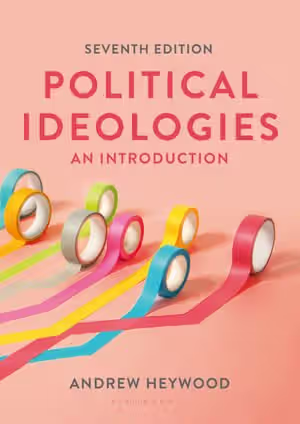
Heywood, A. (2021). Political Ideologies: An Introduction (7th ed.). Red Globe Press / Bloomsbury Academic.
Chapter Summary
An undergraduate textbook in thirteen chapters: an opening chapter on ideology as such, eleven chapters each devoted to one ideology or family of ideas, and a closing chapter on why ideologies matter. The publisher describes the seventh edition as a sweeping survey of the doctrines that have shaped past and present politics. The first half of the book deals with traditional ideologies, namely conservatism, socialism, liberalism, anarchism and fascism, and the later part with more contemporary movements: populism, feminism, green ideology, multiculturalism and religious fundamentalism. The chapter titles are given below; the descriptions stay with what the contents and the publisher's summary show.
Chapter 1: Introducing Political Ideologies
The framing chapter, which by its title introduces political ideologies as a subject before the individual traditions are taken in turn.
Chapters 2–4: Liberalism; Conservatism; Socialism
The three classic modern ideologies, each given a chapter. The publisher groups them with anarchism and fascism among the traditional ideologies that dominated politics past and present.
Chapters 5–7: Anarchism; Nationalism; Fascism
Three further chapters, each on a tradition that the contents list separately. Nationalism sits between anarchism and fascism in the running order.
Chapters 8–12: Populism; Feminism; Green Ideology; Multiculturalism; Religious Fundamentalism
The contemporary ideologies. Populism is the new chapter of this edition and addresses the rise of populist movements across the world and the related decline of liberal democratic values. According to the publisher, the feminism chapter now gives more attention to sexualities, queer politics and trans issues, and the chapter on religious fundamentalism considers a wider range of religions.
Chapter 13: Why Political Ideologies Matter
A fully revised concluding chapter, according to the publisher. It returns from the individual traditions to the question of what the study of ideologies explains, including events such as the decline of liberal democracy and the rise of populism and authoritarianism.
Key Concepts
Chapter 1: What an ideology is
- Political ideology: the book's organizing idea, a body of ideas about politics that the later chapters illustrate through particular traditions.
Chapters 2–7: Traditional ideologies
- Liberalism, conservatism, socialism: the three major doctrines treated in Chapters 2–4.
- Anarchism: a tradition given its own chapter, listed by the publisher among the traditional ideologies.
- Nationalism and fascism: two further traditions treated in Chapters 6 and 7.
Chapters 8–13: Contemporary movements
- Populism: the new chapter in this edition, linked by the publisher to the decline of liberal democratic values.
- Feminism, green ideology, multiculturalism: movements organized around gender, the environment and cultural diversity.
- Religious fundamentalism: treated, in this edition, across a wider range of religions.
- Why ideologies matter: the closing chapter's question.
Critical Analysis
Strengths
- One tradition per chapter. The contents give each major ideology its own chapter in a consistent order, so a student can find any single tradition quickly and compare chapters.
- Study aids built into the text. The publisher mentions Key Thinker boxes, now featuring a more diverse array of voices, and Political Ideologies in Action boxes that apply the ideas to recent political events.
- Online resources. A companion website offers a testbank, PowerPoint slides, a flashcard glossary, additional Political Ideologies in Action cases and interactive simulations, free of extra cost to users of the book.
- Updated for recent politics. The seventh edition adds a chapter on populism and revises the concluding chapter in light of populism and the decline of liberal democracy.
Limitations
- Marketing claims. The claim that the book is the "most accessible, concise and yet comprehensive" introduction is a marketing statement; judge it by sampling a chapter.
- A survey, not an argument. Because each chapter must cover a whole tradition, there is limited room for sustained engagement with primary texts. Students who want the original arguments will need to read the thinkers themselves.
- Ideologies, not first principles. The publisher presents the book as a survey of political creeds and doctrines, so readers who want a sustained argument about which principles are justified will need a work of normative theory.
- Textbook scale. Thirteen chapters with boxes and online resources make it a full course text rather than a short guide, so plan to read selectively.
Where It Fits in the Course
In the modern political thought list Heywood is the broadest survey of the field's isms. Adam Swift's Political Philosophy: A Beginners' Guide for Students and Politicians is organized instead by political values, such as social justice, democracy, liberty and equality, and shows how careful reasoning bears on political arguments, so it complements Heywood by asking what is right rather than what is believed. Will Kymlicka's Contemporary Political Philosophy presents each of the main schools of Anglo-American political philosophy since Rawls and examines their objections.
Rawls's A Theory of Justice, Nozick's Anarchy, State, and Utopia and Iris Marion Young's Justice and the Politics of Difference are primary works of liberal, libertarian and critical political theory. Heywood's chapters on liberalism, anarchism and feminism provide the background in which those books can be placed.
How to Use This Book
No prior study of politics is required. The book suits first-year students taking a course on political ideologies or introductory politics and anyone who wants to know where today's political labels come from.
- Core: Chapter 1, then Chapters 2–4 on liberalism, conservatism and socialism, which provide the vocabulary that the other chapters draw on.
- Next: the remaining traditional ideologies (Chapters 5–7), then the contemporary chapters (8–12) in the order your course takes them.
- Alongside the text: use the Key Thinker boxes to choose one primary text per ideology to read in excerpt, and work through the online cases and glossary flashcards.
- Finish: read Chapter 13 last and test its question against a current political controversy.
- After the book: pair it with Swift for values-based reasoning, and Kymlicka or the primary works for philosophical depth.