01 / Reading Guide
Reading Guide
Citation
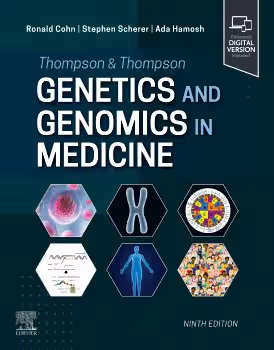
Cohn, R., Scherer, S., & Hamosh, A. (2023). Thompson & Thompson Genetics and Genomics in Medicine (9th ed.). Elsevier.
Chapter Summary
The ninth edition has 20 chapters, followed by a section of clinical case studies illustrating genetic principles, a glossary and answers to the end-of-chapter problems. The publisher notes that the series was first published in 1966 and that this edition was revised by a new editorial team under an expanded title.
Chapters 1–4: Introduction; Introduction to the Human Genome; The Human Genome: Gene Structure and Function; Human Genetic Diversity: Genomic Variation
The opening chapters set the scene and then describe the genome itself: how it is organised, how genes are structured and how they work, and how genomes differ between people. The publisher names copy number and structural genomic variation among the topics given prominent coverage.
Chapters 5–6: Principles of Clinical Cytogenetics and Genome Analysis; The Chromosomal and Genomic Basis of Disease: Disorders of the Autosomes and Sex Chromosomes
These two chapters pair the methods used to analyse chromosomes and genomes with the conditions caused by chromosomal and genomic abnormality, including disorders of the autosomes and the sex chromosomes.
Chapters 7–10: Patterns of Single-Gene Inheritance; Principles of Clinical Epigenetics; Complex Inheritance of Common Multifactorial Disorders; Population Genetics for Genomic Medicine
The book covers classical single-gene inheritance, then epigenetics in its own chapter, then complex inheritance for common multifactorial disorders, and finally population genetics framed for genomic medicine. The publisher singles out non-coding RNAs, chromatin regulation and epigenetics as areas where recent discoveries are covered.
Chapters 11–13: Identifying the Genetic Basis for Human Disease; The Molecular Basis of Genetic Disease; The Molecular, Biochemical, and Cellular Basis of Genetic Disease
This group explains how disease genes are found and then how variation in them produces disease at the molecular, biochemical and cellular levels. It is the book's main treatment of mechanism.
Chapter 14: The Treatment of Genetic Disease
A single chapter on treating genetic disorders, placed after the chapters on mechanism.
Chapters 15–16: Developmental Genetics and Birth Defects; Cancer Genetics and Genomics
Two areas where the preceding material is applied: how development goes wrong, producing birth defects, and how the genome is altered in cancer.
Chapters 17–19: Genetic Counseling and Risk Assessment; Preconception and Prenatal Screening and Diagnosis; Application of Genomics to Medicine and Individualized Health Care
The clinical applications: communicating genetic risk to patients, screening and diagnosis before and during pregnancy, and the use of genomic information in individualised health care.
Chapter 20: Ethical and Social Issues in Genetics and Genomics
The last chapter takes up the ethical and social questions raised by genetic and genomic information.
Clinical Case Studies Illustrating Genetic Principles
A separate section after the chapters. The publisher describes over 40 clinical case studies that illustrate variable expression, pleiotropy and complex disorders, and new diagnostic strategies.
Key Concepts
Chapters 1–6: The genome and its variation
- Genomic variation: differences between genomes, including copy number and structural variation (Chapter 4).
- Clinical cytogenetics: the analysis of chromosomes and genomes in the clinic (Chapter 5).
- Chromosomal and genomic disorders: diseases of the autosomes and sex chromosomes (Chapter 6).
Chapters 7–10: Inheritance and populations
- Single-gene inheritance: the patterns by which single-gene conditions pass through families (Chapter 7).
- Clinical epigenetics: heritable regulation of gene activity that does not change the DNA sequence (Chapter 8).
- Complex inheritance: how common disorders arise from several factors acting together (Chapter 9).
Chapters 11–16: Disease mechanism and application
- Molecular basis of genetic disease: how variants alter gene products and cell function (Chapters 12–13).
- Treatment of genetic disease: therapeutic approaches for genetic conditions (Chapter 14).
- Cancer genomics: the genetic changes underlying cancer (Chapter 16).
Chapters 17–20: Clinical practice and ethics
- Genetic counseling and risk assessment: explaining and quantifying genetic risk to families (Chapter 17).
- Prenatal screening and diagnosis: testing before and during pregnancy (Chapter 18).
- Individualized health care: using genomic information to tailor medical care (Chapter 19).
Critical Analysis
Strengths
- Strong genome-level coverage. The contents list gives separate chapters to genomic variation, clinical cytogenetics and genome analysis, clinical epigenetics, population genetics for genomic medicine and the application of genomics to individualised health care. The publisher stresses non-coding RNA, chromatin regulation and recent technologies.
- Cases built into the book's design. Over 40 clinical case studies sit in a dedicated section, and the publisher says the cases illustrate variable expression, pleiotropy and complex disorders. Chapters carry end-of-chapter questions, with a glossary and answers at the back.
- A long publication history. First published in 1966, the series has been revised repeatedly, and this edition was prepared by a new editorial team with many contributing authors. Elsevier reports its selection for 2026 Doody's Core Titles in Clinical Genetics.
- Balanced between mechanism and application. The mechanism chapters (11–13) are followed by treatment, development, cancer, counseling, screening and genomic medicine, so a reader can see how laboratory findings reach the clinic.
Limitations
- Several specialised areas have no chapter of their own. The contents list has no separate chapters on haemoglobin disorders, immunogenetics or inborn errors of metabolism, each of which has its own chapter in Emery's Elements of Medical Genetics and Genomics. A course that treats them as separate topics may need that book or another reference.
- It starts from the genome, not from patients. The first chapters describe the human genome, gene structure and genomic variation, and the clinical case studies come in a separate section at the back. A reader who prefers to start from clinical presentations may find the order demanding; the case-led and visual books in the course list offer a different entry point.
- Counseling practice is one chapter. Genetic counseling and risk assessment occupy a single chapter (17) of the 20, so readers who want practice-level detail on counseling will need a specialist book.
Where It Fits in the Course
This is one of the two full textbooks in the medical genetics course list. Emery's Elements of Medical Genetics and Genomics is the other: it is arranged in three sections with a clinical emphasis and a final pair of chapters on counselling and on ethical and legal issues, whereas Thompson & Thompson spends more of its length on the genome, its variation and the molecular basis of disease, with a dedicated section of clinical cases. Students can use either as a main text and the other for a second explanation of a difficult topic.
For beginners, Clinical Genetics and Genomics at a Glance offers visual double-page spreads and New Clinical Genetics builds the science from real families. Harper's Practical Genetic Counselling and Human Molecular Genetics are the places to go for depth on counselling practice and on molecular genetics respectively.
How to Use This Book
The book is aimed at medical students, genetic counseling students, students in laboratory medicine and more advanced trainees, as the publisher describes it. Introductory biology with basic cell biology and biochemistry is the expected background.
A practical plan:
- Foundation: Chapters 2 to 4 for the genome and its variation, then Chapter 7 on single-gene inheritance.
- Core clinical genetics: Chapters 5–6 and 9–10 for chromosomes, complex inheritance and populations, with Chapter 17 on counseling and risk assessment.
- Mechanism and treatment: Chapters 11 to 14 when a course turns to how variants cause disease and how it may be treated.
- Application: Chapters 15 to 20 alongside clinical teaching on cancer, pregnancy and genomic medicine.
- Cases and questions: read the clinical case studies at the back as each topic is met, and use the end-of-chapter questions and answers for revision.