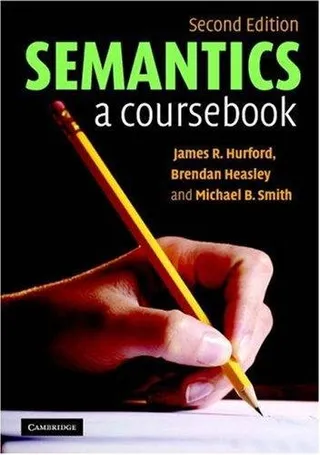
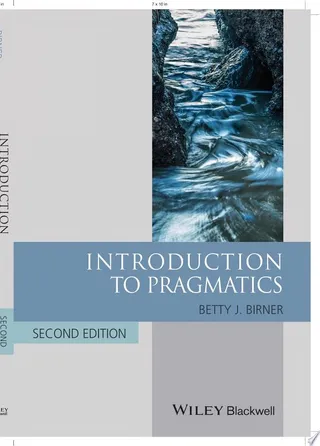
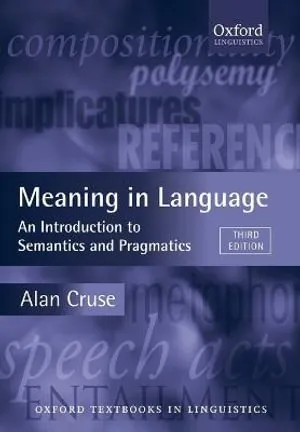
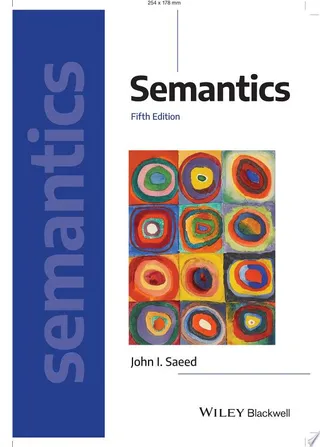
01 / Reading Guide
Reading Guide
Meaning in context: what follows, and what is only suggested
Compare semantics and pragmatics texts, then test a report’s truth conditions, cancellable inference and speaker-knowledge assumptions.
Study route and exercise: University Reading List editorial project.
Who this book is for
For advanced undergraduates beginning a dedicated meaning course and graduate readers needing a descriptive foundation. It is also useful to fieldworkers deciding how to describe semantic distinctions in a language. Its accessible use of notation supports a bridge into specialist reading without removing the need for careful linguistic argument.
Prerequisites
Previous introductory linguistics is expected. Formal logic and set theory are not assumed, although basic notation is introduced; be willing to compare interpretations in carefully controlled contexts.
What it covers
The progression connects word meanings and conversational inference with the way complex expressions receive interpretations. Modality, conditionals, causation, tense and aspect extend the discussion. The approach encourages analysis of what an expression contributes and what a speaker or hearer infers in context, rather than treating every interpretation as a dictionary definition.
How to use it
Construct two short contexts for the same sentence and explain which interpretation changes. Test whether a proposed inference survives negation or questioning, and distinguish a necessary consequence from a defeasible expectation. For fieldwork, record the context and the speaker’s judgment together. Attempt the exercises before using a reference to settle an ambiguity.
Edition and sources
The official record identifies the third edition, published August 30, 2022, PDF ISBN 9783961103904. It provides a free complete PDF under CC BY-SA 4.0. Earlier editions have different identifiers and licensing statements, so use this edition’s own frontmatter when citing or reusing material.