01 / Reading Guide
Reading Guide
Citation
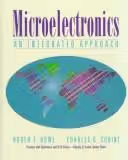
Howe, R. T., & Sodini, C. G. (1996). Microelectronics: An Integrated Approach. Prentice Hall.
Chapter Summary
The book is a large undergraduate textbook of 908 pages by Roger T. Howe and Charles G. Sodini, from the Prentice Hall electronic and VLSI series. The publisher describes it as an introduction to electronics and microelectronics at junior level that presents device physics and circuit design in the context of modern integrated-circuit technology. Its aim is an integrated treatment: it connects the physical behaviour of semiconductor devices to circuit models, analysis and design, rather than treating devices and circuits as separate subjects. Its stated way of making the subject accessible is a concise, concentrated presentation that limits coverage to the concepts needed to understand devices and circuits.
Semiconductor physics and device behaviour
The first strand is the physics of semiconductor devices: why a device behaves as it does, and how that behaviour comes from the material and its structure. The aim is for readers to understand the origin of a device's characteristics before treating it as a symbol in a schematic. The device physics is placed in the setting of integrated-circuit technology.
Device models
The second strand turns physical behaviour into models. The book develops circuit models of devices so that their behaviour can be analysed with the tools of circuit theory. A reader learns both how to build a model and when it is a good approximation.
Analog and digital circuit concepts
On the basis of those models, the book introduces core analog and digital circuit concepts and analyses circuits made from the devices. The emphasis is on connecting what is happening inside a device with what a circuit does, so analysis stays tied to physical understanding.
Electronic design
The last strand is design: using devices, models and analysis to create electronic circuits that do useful work. This reflects the "integrated" in the title, in that design is meant to follow from understanding of the physical device.
Key Concepts
Physical behaviour and models
- Semiconductor devices: components whose electrical behaviour arises from the properties of semiconductor materials.
- Device models: simplified circuit descriptions of a device, used to predict how it behaves in a circuit.
Circuits and design
- Analog and digital circuit analysis: working out the behaviour of circuits built from devices using their models.
- Integrated-circuit technology: the technological setting in which the device physics and circuit design are presented.
- Integrated approach: the book's principle that physics, models, analysis and design should be learned together.
Critical Analysis
Strengths
- Integration of physics and circuits. The book's explicit goal is to connect device physics, models, analysis and design, which suits students who want to know why a circuit element behaves as it does and not only how to use it.
- A selective scope. The authors say they limited coverage to the concepts necessary for understanding devices and circuits, a design choice meant to keep a large subject manageable at junior level.
- Proven as a course text. MIT OpenCourseWare's Fall 2005 version of its undergraduate microelectronic devices and circuits subject (6.012) names the book as its required text, with the course readings drawn from it, which shows that it can carry a full semester.
Limitations
- Dated. It was published in the 1990s, and device technology and design practice have moved on, so recent developments in semiconductor devices are not reflected.
- Demanding. The integrated approach assumes comfort with physics and mathematics at the level of an engineering degree; the MIT subject that uses it lists a signals-and-systems subject (as a corequisite), electricity and magnetism, and differential equations as prerequisites.
- Hard to obtain new. It is a 1990s textbook, so readers may need to find it through libraries or second-hand.
Where It Fits in the Course
Howe and Sodini is the more advanced of the textbooks on the circuits and electronics list, and is for a student who already has circuit analysis. Alexander and Sadiku's Fundamentals of Electric Circuits is a comprehensive circuit-analysis text to read first, and Agarwal and Lang's Foundations of Analog and Digital Electronic Circuits is a unified treatment that moves from circuit analysis to digital abstraction, MOS devices and amplifiers, and can serve as the bridge.
Storey's Electronics: A Systems Approach and Scherz and Monk's Practical Electronics for Inventors are gentler, more applied routes for readers who prefer hands-on or systems-level introductions. Hayt and Buck's Engineering Electromagnetics develops the field theory used across electrical engineering, and Patterson's Computer Organization and Design treats processor design and computer architecture, a direction that digital-circuit coverage in a microelectronics course leads toward.
How to Use This Book
The book suits second- and third-year electrical engineering and computer engineering students taking a first course in microelectronic devices and circuits. A reader should already know basic circuit analysis, calculus, differential equations and introductory physics.
A practical plan:
- Follow a course shape. A one-semester subject built on the book at MIT moved from semiconductor fundamentals to p-n junction and MOS device behaviour, the MOSFET and the digital inverter, the bipolar transistor, and then analog amplifiers and their frequency response.
- Work problems. The subject is learned by solving problems and by carrying a model from physics to circuit, so practise on every topic rather than reading passively.
- Use a circuit simulator. The MIT subject includes a circuit design project that requires SPICE, and simulating a circuit is a good way to test a device model against the hand analysis.
- Pair it with a second text. The MIT syllabus lists Fonstad's Microelectronic Devices and Circuits, Sedra and Smith's Microelectronic Circuits and Pierret's Semiconductor Device Fundamentals as reference texts, which are useful where a different explanation is needed.
- Check the edition and year. The publication year is given as 1996 in some listings and as 1997 in library and Google Books records, so cite the copy you hold.