01 / Reading Guide
Reading Guide
Citation
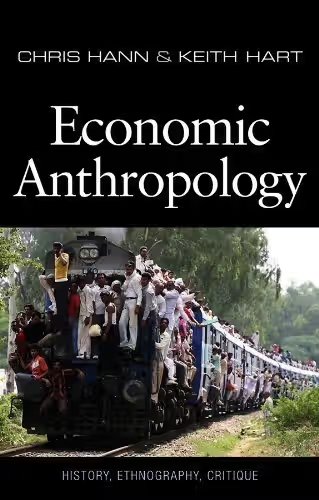
Hann, C., & Hart, K. (2011). Economic Anthropology: History, Ethnography, Critique. Polity Press.
Chapter Summary
The book is a short introduction of about 208 pages: a preface, nine chapters, bibliographical notes and references. Its authors, Chris Hann of the Max Planck Institute for Social Anthropology and Keith Hart of Goldsmiths, University of London, present it as a history of the subfield organised around what anthropologists have contributed to the three great questions of modern economic history: development, socialism and "one-world capitalism". The publisher's summary gives the outline of that history: before the Second World War anthropologists tried and failed to interest economists in their findings; they then debated whether an approach taken from economics suited non-industrial economies; and since the 1970s they have built a critique of capitalism by studying it at home as well as abroad. The book was selected by Choice as an Outstanding Academic Title for 2013.
Chapter 1: Introduction: Economic Anthropology
The opening chapter sets out the authors' standpoint. James Cuffe's review in the LSE Review of Books (2012) highlights two commitments made here: the book is written from a critical anthropology that examines the foundations of contemporary civilisation by exercising judgement, rather than withholding judgement or simply advocating for the people studied; and it aims to prepare the ground for economic anthropology as a self-standing discipline.
Chapter 2: Economy from the Ancient World to the Age of the Internet
A long view of what "economy" has meant. According to Cuffe, the authors trace the word from the management of large household estates in ancient Greece (oikonomia) through the separation of markets from households to the dominance of markets by firms and their relations with national governments, and they note how loose and even confused the term has become in contemporary use.
Chapter 3: The Rise of Modern Economics and Anthropology
The parallel emergence of the two disciplines. The title and the publisher's outline point to the period up to the Second World War, when, in the publisher's words, anthropologists tried and failed to interest economists in their "exotic" findings; the book connects the subfield here to its roots in Western philosophy and social theory.
Chapter 4: The Golden Age of Economic Anthropology
In the publisher's outline, the period after the Second World War is the one in which anthropologists launched a vigorous debate over whether an approach taken from economics was appropriate to non-industrial economies. The title of the following chapter names that debate as the formalist–substantivist controversy, which places it in this chapter's "golden age".
Chapter 5: After the Formalist–Substantivist Debate
The title marks the directions the subfield took once that debate had run its course. Across the book, Cuffe notes, the authors trace economic anthropology against thematic currents such as Marxism and feminism.
Chapters 6–8: Unequal Development; Socialism, Postsocialism and Reform Socialism; One-world Capitalism
The three thematic chapters correspond to the three great questions named in the description. The development chapter addresses inequality between rich and poor parts of the world; Cuffe notes the book's discussion of how "development" came to mean the movement of people into urban life and the attempt to manage that change equitably. The socialism chapter covers socialist, postsocialist and reforming socialist economies; Stephen Gudeman's endorsement singles out its treatment of the socialist and postsocialist eras. The final thematic chapter turns to capitalism as a single world system studied, since the 1970s, at home as well as abroad.
Chapter 9: Where Do We Go From Here?
The conclusion argues, in a passage Cuffe quotes, that economic anthropology could become a true discipline with its own objects, theories and methods, alongside political anthropology, the anthropology of development and economic sociology, while breaking down barriers between the human sciences. The publisher describes the aim as rejuvenating economic anthropology as a humanistic project, with continued reliance on Marcel Mauss and Karl Polanyi; Don Robotham's endorsement calls this a case for a "human economics" addressing both moral and material needs.
Key Concepts
Chapters 1–3: Standpoint and long history
- Critical anthropology: an anthropology that judges the foundations of contemporary civilisation instead of only describing or advocating.
- Oikonomia: the ancient Greek management of the household estate, the starting point of the book's history of the idea of economy.
- Economics and anthropology as sibling disciplines: two modern fields whose relationship the book follows from their emergence.
Chapters 4–5: The debate and after
- Formalism and substantivism: the opposing positions on whether the methods of economics apply to non-industrial economies.
- Marxist and feminist currents: theoretical currents against which, according to Cuffe, the book traces the subfield.
Chapters 6–9: The great questions
- Unequal development: the economic gap between regions of the world and anthropology's contribution to understanding it.
- Socialism and postsocialism: centrally planned economies, their reform and their aftermath.
- One-world capitalism: capitalism as a global system, studied in the West as well as elsewhere.
- Human economy: the authors' humanistic programme, drawing on Mauss and Polanyi, for an economic anthropology that addresses moral as well as material needs.
Critical Analysis
Strengths
- A history, not a list of topics. The book treats the subfield as a narrative running from the ancient world to the global financial crisis, so students see why its debates arose. Gudeman called it the most sophisticated history of economic anthropology he had seen, and the Journal of the Royal Anthropological Institute described it as tackling big questions in deceptively simple prose.
- Engagement with economics. The authors connect anthropology to economics, economic sociology and history rather than defining it against them, and reviewers in economic sociology (the European Economic Sociology Newsletter and the Revue Française de Socio-Économie) found it useful for their own fields.
- A clear argument. The opening standpoint and the closing case for a self-standing discipline frame the whole book. Students get an informed position to test rather than a neutral survey.
- Good routes onward. Cuffe found the bibliographical notes at the end a useful guide to further reading, which matters in a book this short.
Limitations
- Brief by design. Cuffe concludes that, because of its size and scope, the book cannot offer the definitive critique of the field or develop its arguments fully; its treatment of history is quick, and readers wanting detail on any one aspect should use it as a guide only.
- Light on ethnography for a book with "ethnography" in its title. Cuffe found the sections drawing on the authors' own fieldwork rich but too short, and he recommends reading the book with a lecturer's help or alongside primary texts.
- Partisan. The book argues for a particular future for the subfield and a particular judgement of market economics. That is its purpose, but students should recognise it as a position.
- Written at the time of the 2008 crisis. The publisher frames the book's relevance by the global financial crisis; developments since 2011 are not covered.
Where It Fits in the Course
In the economic and political anthropology list, Hann and Hart is the compact historical overview. Richard Wilk and Lisa Cliggett's Economies and Cultures is its closest companion: an introductory textbook organised around competing assumptions about human nature (self-interested, social, moral) rather than around a chronological history. Reading both gives two different maps of the same field; Wilk and Cliggett is the more systematic introduction to the theoretical positions, Hann and Hart the sharper argument about where the subfield came from and should go.
The classic monographs on the list are the primary texts the overview refers to. Marcel Mauss's The Gift, which the authors present as still relevant, and Bronisław Malinowski's Argonauts of the Western Pacific, the Trobriand ethnography of exchange and long-term fieldwork, belong to the early history covered in Chapter 3. E. E. Evans-Pritchard's The Nuer, on livelihood and political order without a centralised state, links economic anthropology to the political side of the course. David Graeber and David Wengrow's The Dawn of Everything is a recent, wide-ranging reinterpretation of human history and of the origins of hierarchy and the state; it reads well after Hann and Hart's final chapters as another attempt to bring anthropology to bear on large questions.
How to Use This Book
The book assumes no training in anthropology or economics and is aimed at social science students at all levels and at general readers. Its brevity means it can be read in full early in a course.
- Core: read Chapter 1 for the standpoint, then Chapters 3–5 for the history of the subfield's central debates. These chapters provide the vocabulary used throughout the course.
- Background: Chapter 2 is a long view of the idea of economy; it is useful context but can be read quickly by students short of time.
- By course theme: Chapters 6–8 can be matched to course units on development, socialism and postsocialism, and global capitalism.
- Finish with Chapter 9, and use it for a seminar on whether economic anthropology should be a discipline of its own.
Read it, as its reviewer advises, with primary texts at hand: pair the history chapters with extracts from Mauss, Malinowski and Polanyi, and use the bibliographical notes to choose further reading for essays. Because the treatment is concise, any essay topic will need sources beyond this book.