01 / Reading Guide
Reading Guide
Citation
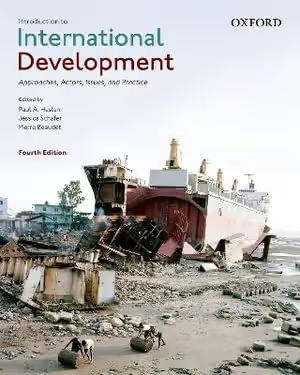
Haslam, P. A., Schafer, J., & Beaudet, P. (Eds.). (2021). Introduction to International Development: Approaches, Actors, Issues, and Practice (4th ed.). Oxford University Press Canada.
Chapter Summary
The fourth edition is an edited textbook of about 590 pages with thirty contributed chapters. The publisher says it brings together experts from disciplines such as geography, history, sociology, political science, economics, gender studies and anthropology, offering foundational overviews as well as in-depth coverage of issues at the centre of current debates. This edition is updated for the UN Sustainable Development Goals and the COVID-19 pandemic, adds two chapters on economic development theories, and has new chapters on refugees and on economic resilience in Indigenous communities. The chapter titles come from the publisher's student resources; the notes below describe grouped chapters at the level those titles allow.
Chapters 1–3: What Is Development?; Imperialism and the Colonial Experience; Theories of Development Economics
The book opens by asking what development means, then turns to imperialism and the colonial experience as the historical background, and then to theories of development economics, one of the topics given extra coverage in this edition.
Chapters 4–7: The Critical Political Economy of Development; Post-Development and Alternatives to Development; Gender and Development; Globalization and Development
These four chapters add critical and alternative perspectives. They set a political-economy critique and the post-development rejection of the idea of development beside gender-focused approaches and a discussion of globalization.
Chapters 8–11: State of the State; National Development Agencies and Bilateral Aid; The International Financial Institutions; The United Nations and Multilateral Actors in Development
The book now moves to actors. It starts with the state and then covers national aid agencies and bilateral aid, the international financial institutions, and the United Nations and other multilateral bodies.
Chapters 12–14: Private Enterprise and Development; Civil Society and Development; China and the Emerging Economies
These chapters continue the survey of actors with business, civil society and the emerging economies, with China singled out in its own chapter.
Chapters 15–18: Debt and Development; Free-Trade, Fair-Trade, and South-South Trade; Democracy; Climate Change, Environment, and Development
The issues section begins with debt, trade (free, fair and South-South), democracy, and the environment and climate change.
Chapters 19–22: Rural Development; Urban Development; Development and Health; Conflict and Development
These chapters take sectors and settings: rural and urban areas, health, and conflict.
Chapters 23–25: Refugees and International Development Policy and Practice; Indigenous Community Economic Resilience; Culture and Development
Chapter 23 on refugees and Chapter 24 on Indigenous community economic resilience are the two new chapters on those topics in this edition. Chapter 25 addresses the relation of culture and development.
Chapters 26–30: Measuring and Evaluating Poverty; Inequality and Social Policy; Planning and Appraising Development Projects; Humanitarian Assistance and Intervention; Ethics of Development
The closing chapters move toward measurement and practice: measuring poverty, inequality and social policy, planning and appraising projects (Chapter 28 has an appendix), humanitarian assistance and intervention, and the ethics of development.
Key Concepts
Chapters 1–7
- Development: the question posed by the opening chapter title.
- Colonial experience: imperialism as the historical background to development.
- Post-development: the critique of the idea of development and the search for alternatives.
- Gender and development: a perspective with its own chapter.
Chapters 8–18
- Bilateral and multilateral aid: aid delivered by national agencies, and through the United Nations and other multilateral bodies.
- International financial institutions: the lenders and policy-setters given their own chapter.
- Debt, fair trade and South-South trade: named in chapter titles on economic relations.
- Democracy: a chapter in the issues section.
Chapters 19–30
- Economic resilience: the Indigenous community focus of Chapter 24.
- Measuring poverty: Chapter 26's subject.
- Project planning and appraisal: the practice-oriented Chapter 28.
- Humanitarian intervention and ethics: the last two topics in the book.
Critical Analysis
Strengths
- Wide, multi-disciplinary range. Thirty chapters by specialists in several disciplines cover theory, actors, issues and practice-oriented topics, so one volume can anchor a full course.
- Includes critical and alternative views. Separate chapters on critical political economy, post-development and gender give space to approaches beyond mainstream economics.
- Recent additions. The edition adds the Sustainable Development Goals, the COVID-19 pandemic, refugees and Indigenous economic resilience.
- Strong teaching apparatus. The publisher's student resources list learning objectives, chapter summaries, key terms, videos, review questions, self-grading quizzes and answers for the chapters.
Limitations
- Length. At about 594 pages, the book is long for a first course, and instructors will usually select chapters.
- Contributed chapters. As an edited collection, it may vary in style and depth from chapter to chapter, and no single argument runs through the volume.
- Practice is a small share. Only the closing chapters (measurement, project planning, humanitarian assistance and ethics) are about the work of development in practice, while the rest of the thirty chapters cover theory, actors and issues.
Where It Fits in the Course
Within the globalization and development list, this is the broadest textbook entry. Development and Social Change by McMichael and Weber treats development as a historical project from colonialism to current crises, and follows that single historical thread through the book; Theories of Development by Peet and Hartwick surveys the schools of thought and argues for a socially just alternative. Steger's Globalization: A Very Short Introduction is a much shorter orientation to a related topic.
Held and co-authors' Global Transformations is a systematic study of globalization, and Evans's Embedded Autonomy is a comparative study of how states shape industrial change in Brazil, India and South Korea. After the survey, these show two ways of going deeper.
How to Use This Book
No prerequisites are required; the book is designed for a first course in development studies.
A practical plan: read Chapters 1 to 3 to learn the vocabulary, then choose among the later groups by interest. Chapters 4 to 7 give the critical frameworks; Chapters 8 to 14 cover the actors; Chapters 15 to 25 cover issues and settings, which can be read in any order; Chapters 26 to 30 suit readers who want to know how development work is measured and carried out. Use the learning objectives and key terms before each chapter, and the review questions after it. Pair the survey with one deeper book from the course list.