01 / Reading Guide
Reading Guide
Citation
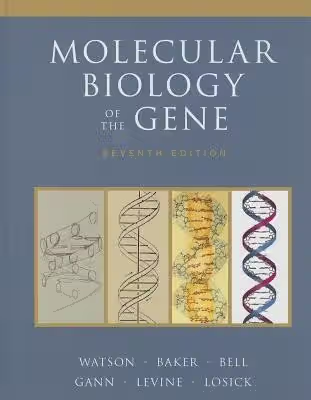
Watson, J. D., Baker, T. A., Bell, S. P., Gann, A., Levine, M., & Losick, R. (2014). Molecular Biology of the Gene (7th ed.). Pearson.
Chapter Summary
The seventh edition has 22 chapters in five parts, followed by two appendices (Model Organisms and Answers), in xxxiv + 872 pages according to the Library of Congress record. The publisher describes "twenty-two concise chapters, co-authored by six highly distinguished biologists", and says the edition is up to date with recent research and provides new end-of-chapter problems and the MasteringBiology online homework system. James Watson was the sole author of the first three editions (1965, 1970 and 1976) and a co-author of the later ones. The chapter titles below are taken from the library contents note for this edition.
Part I: History (Chapters 1–2)
"The Mendelian View of the World" and "Nucleic Acids Convey Genetic Information" open the book with the historical and conceptual background of the gene.
Part II: Structure and Study of Macromolecules (Chapters 3–7)
The part runs from "Weak and Strong Chemical Bonds" (3) through "The Structure of DNA" (4), "The Structure of RNA" (5) and "The Structure of Proteins and Protein: Nucleic Acid Interactions" (6) to "Techniques of Molecular Biology" (7). Structure and methods thus come before any mechanism.
Part III: Maintenance of the Genome (Chapters 8–12)
The part covers "Genome Structure, Chromatin and the Nucleosome" (8), "The Replication of DNA" (9), "The Mutability and Repair of DNA" (10), "Homologous Recombination at the Molecular Level" (11) and "Site-Specific Recombination and Transposition of DNA" (12).
Part IV: Expression of the Genome (Chapters 13–17)
The expression chapters are "Mechanisms of Transcription" (13), "RNA Splicing" (14), "Translation" (15) and "The Genetic Code" (16), followed by "Origins and Early Evolution of Life" (17).
Part V: Regulation (Chapters 18–22)
The part closes the book with "Transcriptional Regulation in Prokaryotes" (18), "Transcriptional Regulation in Eukaryotes" (19), "Regulatory RNAs" (20), "Gene Regulation in Development and Evolution" (21) and "Systems Biology" (22).
Appendices
"Model Organisms" and "Answers" (to the end-of-chapter problems).
Key Concepts
Parts I–II: History, Chemistry and Structure
- Mendelian view of the world: the book's historical starting point (Chapter 1).
- Weak and strong chemical bonds: the chemical forces behind macromolecular structure (Chapter 3).
- Structures of DNA, RNA and proteins: with protein-nucleic acid interactions (Chapters 4 to 6).
Part III: Maintenance of the Genome
- Chromatin and the nucleosome: genome structure at the level of chromosomes (Chapter 8).
- Replication, mutability and repair of DNA: Chapters 9 and 10.
- Recombination: homologous recombination, and site-specific recombination and transposition (Chapters 11 and 12).
Parts IV–V: Expression and Regulation
- Transcription, RNA splicing and translation: Chapters 13 to 15, followed by the genetic code (16).
- Regulation in prokaryotes and eukaryotes: Chapters 18 and 19.
- Regulatory RNAs and systems biology: Chapters 20 and 22.
Critical Analysis
Strengths
- A clear arc from structure to function. The five-part design moves from history and macromolecular structure through maintenance and expression of the genome to its regulation. Putting a methods chapter (7) in Part II means that readers have the experimental background before they meet the mechanisms in Parts III to V.
- Authority and continuity. The book is descended from Watson's 1965 original and is now written by six researchers (the author biographies place them at Cold Spring Harbor Laboratory, MIT, the University of California, Berkeley and Harvard). Watson was sole author of editions one to three and a co-author of editions four to six, and the publisher says the seventh edition updates the book with recent research.
- Concise chapters and study support. The publisher stresses concise chapters, new end-of-chapter problems and an online homework system, and the Answers appendix listed in the contents supports self-study.
- A reference appendix on model organisms. The back matter lists an appendix on model organisms, a convenient place to look up the experimental systems behind genetic and molecular findings.
Limitations
- Dated. The seventh edition was published in 2013 and carries a 2014 copyright. It cannot cover later developments, so readers of newer topics should consult a more recent text; later books in this list cover the years since.
- Mechanism before context. Because Part II places chemistry, structure and techniques first, a reader who wants to start with how a process works must use the table of contents to jump ahead.
- Quality claims are the publisher's. The descriptions of the book's strengths come from the publisher's statements, the author biographies and the library contents note.
- Not a cell biology text. The contents concentrate on the gene: DNA, RNA and protein mechanisms, the genome and its regulation. Readers who need membranes, the cytoskeleton or metabolism will need a cell biology text beside it.
Where It Fits in the Course
The book is a main text for a dedicated molecular biology course taken after introductory biology and genetics. Within this course list, Molecular Biology: Principles of Genome Function is the closest comparable text. It is organized around genome function, gives the cell cycle, chromosome segregation and DNA damage responses their own chapters, and compares bacteria, archaea and eukaryotes explicitly; Watson and colleagues proceed instead from structure to maintenance, expression and regulation in five parts.
For an easier start there are Fundamental Molecular Biology by Allison, a compact text on the core ideas, and the Very Short Introduction to molecular biology. For more detail, Lewin's Genes is a comprehensive treatment of gene structure, organization and expression, and Zlatanova's Molecular Biology explains the field through molecular structure and single-molecule experiments.
How to Use This Book
The book is for undergraduates who already have introductory biology and some genetics and want a mechanistic account of how genetic information is stored, copied and expressed. Graduate students new to the field can also use it as an orientation.
Read the parts in order the first time. Part II is a foundation, so those who already know nucleic acid and protein structure can move fast, but they should read Chapter 7 on techniques, which the later chapters rely on. Parts III and IV are the core: take replication, repair and recombination (Chapters 9 to 12) before transcription, splicing and translation (13 to 16). Part V can be read alongside a gene regulation or developmental biology unit. Chapter 17 (origins and early evolution of life) and Chapter 22 (systems biology) are suitable for selective reading.
Work the end-of-chapter problems and check them against the answers appendix. Use the model organisms appendix as a reference whenever an unfamiliar experimental organism is named in a later chapter.