01 / Reading Guide
Reading Guide
Citation
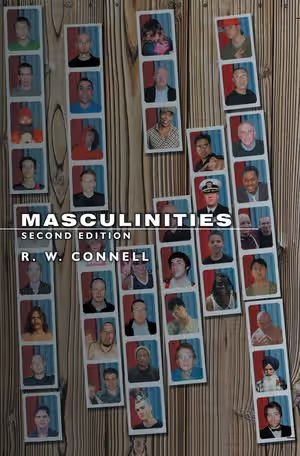
Connell, R. W. (2005). Masculinities (2nd ed.). Polity. (U.S. edition: University of California Press.)
Chapter Summary
The book argues that there is no single concept of masculinity but many masculinities, each associated with different positions of power, within a gender order that continues to extend privilege to men over women while also raising difficult issues for men and boys. The second edition, of about 350 pages, adds a substantial new introduction and a new concluding chapter, the Afterword, to the first edition. The new material reviews the development of masculinity studies in the ten years since the first edition and discusses global gender relations, new theories, practical uses of the research and the politics of masculinities. The body of the book has ten chapters in three parts.
Introduction to the Second Edition
The new introduction has five sections: Introducing Masculinities; Growth of the Field of Study; Debates and Difficulties; The Global Dimension; and In Conclusion. It takes stock of research since the book first appeared and so doubles as a guide to the field.
Part I, Chapters 1–3: Knowledge and its Problems
Chapter 1, The Science of Masculinity, surveys rival knowledges about men: clinical knowledge (the Oedipus complex, archetype and identity, radical psychoanalysis), the male role, and the new social science (histories, the ethnography of the other, social construction and gender dynamics), together with political knowledge. Chapter 2, Men's Bodies, discusses true masculinity, bodies as machine, landscape and compromise, and body-reflexive practices. Chapter 3, The Social Organization of Masculinity, is where the central concepts are set out: defining masculinity, gender as a structure of social practice, relations among masculinities (hegemony, subordination, complicity, marginalization), and the historical dynamics, violence and crisis tendencies of the gender order.
Part II, Chapters 4–7: Four Studies of the Dynamics of Masculinity
Part II presents four studies, whose section headings are the best guide to their content. Chapter 4, Live Fast and Die Young, treats a group and its context under headings such as abstract labour, violence and the state, compulsory heterosexuality for men, masculinity as collective practice and protest masculinity. Chapter 5, A Whole New World, is organized around moments of engagement, distancing, separation and contestation, with sections on the environmental movement and on encounters with feminism. Chapter 6, A Very Straight Gay, has sections on sexuality, being gay (identity and relationships), relations between masculinities, facing change, and gay masculinity as project and history. Chapter 7, Men of Reason, deals with constructing masculinity and rationality, career and workplace, the irrational, and reason and change.
Part III, Chapters 8–10: History and Politics
Chapter 8, The History of Masculinity, treats the production of masculinity in the formation of the modern gender order, transformations, and the present moment. Chapter 9, Masculinity Politics, takes up men's politics and masculinity politics, and looks at masculinity therapy, the gun lobby, gay liberation and exit politics. Chapter 10, Practice and Utopia, considers historical consciousness, purposes of action, degendering and recomposing, forms of action, education and prospects.
Afterword: The Contemporary Politics of Masculinity
The new concluding chapter discusses men's interests in contemporary patriarchy, "backlash" politics, neoliberalism and men's interests, the problem of violence, and masculinity politics on a world scale.
Key Concepts
Part I
- Masculinities, plural: the book's central claim that there are many masculinities associated with different positions of power.
- Gender as a structure of social practice: Chapter 3's way of treating gender as an organized set of practices rather than a property of individuals.
- Hegemony, subordination, complicity, marginalization: the four relations among masculinities named in Chapter 3.
Parts II–III
- Protest masculinity: one of the section themes of Chapter 4.
- Masculinity politics: the subject of Chapter 9, which also takes up men's politics.
- Degendering and recomposing: forms of action considered in Chapter 10.
Introduction and Afterword
- The global dimension: the new introduction's attention to global gender relations.
- Men's interests in patriarchy: the Afterword's reassessment in the context of backlash politics and neoliberalism.
Critical Analysis
Strengths
- Theory tied to case studies. Chapter 3's concepts are followed directly by the four studies of Part II, so the reader sees them applied to lives and workplaces before the book turns to history and politics.
- Wide knowledge base. Chapter 1 sets rival kinds of knowledge about masculinity, from clinical to social-scientific and political, side by side, which places the author's approach within the existing field.
- A two-part updating. The new introduction and the Afterword frame the original chapters with a decade of later research.
- Praise from reviewers. Reviews of the previous edition quoted by the publisher call it clearly written and sophisticated (Choice), engagingly written, broadly researched and politically useful (Australian Journal of Political Science), and a fundamental study of masculinity in modern social inequality (Journal for the Study of British Cultures).
Limitations
- A small empirical base. Part II rests on four studies, so the cases that illustrate the concepts are few.
- Updating is at the edges. The publisher describes the new material as a substantial new introduction and conclusion; the four studies of Part II are not described as new.
- A reader's field knowledge helps. Chapter 1 refers to psychoanalytic and social-scientific literatures that a newcomer may need to look up.
Where It Fits in the Course
Masculinities is the major social-scientific study of men and gender relations among the course's books. Connell and Bridges's Gender: In World Perspective and Wade and Ferree's Gender: Ideas, Interactions, Institutions are textbook-level introductions; Weeks's Sexuality is a short introduction to the social study of sexuality, useful for the gay-masculinity material in Chapter 6. Collins's Black Feminist Thought is a major work on race, gender and class.
Butler's Gender Trouble approaches gender categories through philosophical and psychoanalytic argument, whereas Connell works from social structure, case studies and history; reading the two together shows two very different routes to questioning fixed notions of gender.
How to Use This Book
This book suits advanced undergraduates and graduate students who have taken an introduction to gender and have some familiarity with feminist theory and qualitative research.
A practical plan:
- Core: Chapter 3 first if short of time; then Chapter 1 for the background and Chapter 8 for the historical argument.
- Cases: Part II (Chapters 4–7), read as four stand-alone studies; choose the ones nearest your own interests.
- Politics and updating: Chapters 9–10, the Introduction to the Second Edition and the Afterword, which together bring the argument forward to the contemporary politics of masculinity.
- Optional on first pass: Chapter 2 on bodies, to be read with Chapter 3 when body-reflexive practices become relevant.