01 / Reading Guide
Reading Guide
Who this book is for
For undergraduates beginning systematic morphological analysis. It is a compact route from core terminology toward more demanding questions about word structure. Students who know grammar mainly as a set of correct forms can use it to ask how an analysis is justified by patterns across related words.
Prerequisites
An introductory linguistics course is helpful, especially familiarity with sounds, grammatical categories and the distinction between a word’s form and meaning. The text is written in English for philology students, primarily in Slovakia. English examples predominate, with comparisons that reward attention to languages you may not already know.
What it covers
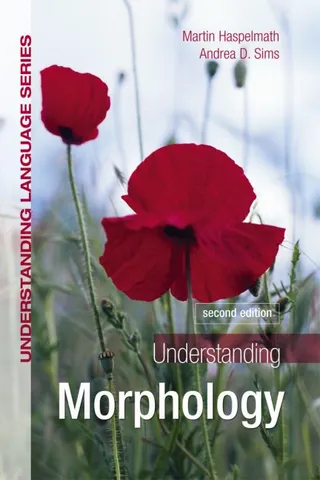
The book introduces the domain of morphology, linguistic signs, basic morphological units and competing ways to describe morphological structure. Inflection and derivation are situated alongside categories and word-formation processes, with English and cross-linguistic examples. Its goal is to prepare readers to perform analyses rather than merely recognise a list of technical labels.
How to use it
Build a small dataset of related word forms and propose the smallest recurring form-meaning pairings. Check whether your segmentation predicts another example, then look for a counterexample. Compare an item-based analysis with an account that treats an operation or a whole paradigm as central. Keep inflectional categories separate from word-formation processes and explain any borderline case using evidence rather than the label alone.
Edition and sources
The university publisher identifies the first edition, January 26, 2021 and electronic ISBN 9788081529597. Its complete PDF carries CC BY-NC-ND 4.0. Free reading does not remove the restriction on sharing adapted versions.