01 / Reading Guide
Reading Guide
Citation
Camerer, C. F., Loewenstein, G., & Rabin, M. (Eds.). (2004). Advances in Behavioral Economics. Princeton University Press and Russell Sage Foundation.
Chapter Summary
This is an edited volume of twenty-five previously published articles, plus an introductory essay by Camerer and Loewenstein, in four parts: Introduction, Basic Topics, Applications and New Foundations. The publisher describes the articles as the most important papers in behavioral economics since about 1990, including updates of earlier foundational contributions and cutting-edge papers that break new theoretical and empirical ground. The book is about 740 pages; the chapters are the authors' own papers, not summaries by the editors. The contributors include Kahneman, Tversky, Thaler, Akerlof, Fehr, Laibson, O'Donoghue, Rabin, Shefrin, Odean, Crawford and the editors.
Part One: Introduction (Chapter 1)
Chapter 1, "Behavioral Economics: Past, Present, Future" by Camerer and Loewenstein, is the long survey essay that opens the book, running about fifty pages. It places the later chapters in the history of the field and in relation to standard economics.
Part Two: Basic Topics, Reference-Dependence and Loss-Aversion (Chapters 2–3)
Chapter 2, "Experimental Tests of the Endowment Effect and the Coase Theorem" (Kahneman, Knetsch and Thaler), tests the endowment effect experimentally and its bearing on the Coase theorem. Chapter 3, "Mental Accounting Matters" (Thaler), makes the case for mental accounting.
Preferences over Risky and Uncertain Outcomes (Chapters 4–5)
Chapter 4, "Developments in Nonexpected-Utility Theory: The Hunt for a Descriptive Theory of Choice under Risk" (Starmer), surveys alternatives to expected utility as descriptions of choice under risk. Chapter 5, "Prospect Theory in the Wild: Evidence from the Field" (Camerer), looks at field evidence for prospect theory.
Intertemporal Choice (Chapters 6–7)
Chapter 6, "Time Discounting and Time Preference: A Critical Review" (Frederick, Loewenstein and O'Donoghue), reviews the evidence on discounting. Chapter 7, "Doing It Now or Later" (O'Donoghue and Rabin), analyses choices between acting now and later.
Fairness and Social Preferences (Chapters 8–11)
Chapter 8, "Fairness as a Constraint on Profit Seeking: Entitlements in the Market" (Kahneman, Knetsch and Thaler), considers fairness as a constraint on profit seeking. Chapter 9, "A Theory of Fairness, Competition, and Cooperation" (Fehr and Schmidt), and Chapter 10, "Incorporating Fairness into Game Theory and Economics" (Rabin), are theoretical models of fairness. Chapter 11, "Explaining Bargaining Impasse: The Role of Self-Serving Biases" (Babcock and Loewenstein), applies self-serving bias to bargaining.
Game Theory (Chapters 12–13)
Chapter 12, "Theory and Experiment in the Analysis of Strategic Interaction" (Crawford), and Chapter 13, "Behavioral Game Theory: Predicting Human Behavior in Strategic Situations" (Camerer), combine experiments and theory about strategic behaviour.
Part Three: Applications (Chapters 14–24)
Macroeconomics and savings: Chapter 14, "Mental Accounting, Saving, and Self-Control" (Shefrin and Thaler); Chapter 15, "Golden Eggs and Hyperbolic Discounting" (Laibson); Chapter 16, "The Fair Wage-Effort Hypothesis and Unemployment" (Akerlof and Yellen); Chapter 17, "Money Illusion" (Shafir, Diamond and Tversky). Labor economics: Chapter 18, "Fairness and Retaliation: The Economics of Reciprocity" (Fehr and Gächter); Chapter 19, "Labor Supply of New York City Cab Drivers: One Day at a Time" (Camerer, Babcock, Loewenstein and Thaler); Chapter 20, "Wages, Seniority, and the Demand for Rising Consumption Profiles" (Frank and Hutchens); Chapter 21, "Incentives, Punishment, and Behavior" (Gneezy and Rustichini). Finance: Chapter 22, "Myopic Loss-Aversion and the Equity Premium Puzzle" (Benartzi and Thaler); Chapter 23, "Do Investors Trade Too Much?" (Odean); Chapter 24, "Loss-Aversion and Seller Behavior: Evidence from the Housing Market" (Genesove and Mayer).
Part Four: New Foundations (Chapters 25–26)
Chapter 25, "Case-Based Decision Theory" (Gilboa and Schmeidler), proposes a different foundation for decision-making. Chapter 26, "Out of Control: Visceral Influences on Behavior" (Loewenstein), examines visceral factors in behaviour. An index closes the volume.
Key Concepts
Parts One and Two
- Endowment effect and loss aversion: valuing what one owns above what one could buy.
- Mental accounting: treating money differently according to mental categories.
- Nonexpected-utility theories and prospect theory: alternatives to expected utility for choice under risk.
- Time preference and discounting: how people trade off the present against the future.
- Fairness and social preferences: models in which people care about fair outcomes and reciprocity.
- Behavioral game theory: predicting behaviour in strategic situations with experimental evidence.
Parts Three and Four
- Hyperbolic discounting and self-control: applied to saving.
- Fair wage-effort and money illusion: behavioural accounts of wages and unemployment.
- Reciprocity and incentives: how fairness and punishment alter behaviour at work.
- Myopic loss aversion and loss aversion in markets: behavioural explanations of the equity premium, trading and house sales.
- Case-based decision theory and visceral factors: new foundations for choice.
Critical Analysis
Strengths
- A concentrated set of key papers. The publisher describes twenty-five articles gathered in one place, from foundational contributions to cutting-edge papers.
- Clear thematic organisation. Part Two is arranged by topic, and Part Three by field of application (macroeconomics, labor, finance), so a reader can follow one theme or one field.
- Breadth of evidence. The titles show experiments (the endowment effect, behavioral game theory), field data (cab drivers, housing, investors) and formal theory (Fehr and Schmidt on fairness, case-based decisions) side by side.
- Editors' framing. The long opening essay by Camerer and Loewenstein sets the field out before the papers begin.
Limitations
- Journal-article level. The chapters are research papers, so the volume is not a systematic textbook, and readers meet the technical content as the authors wrote it.
- Dated by its cutoff. The volume appeared in 2003–2004, so later developments in behavioral economics are not included.
- Uneven prerequisites. Papers range from experiments to formal models of fairness and decision foundations, so some chapters demand more theory than others.
- Page count varies by listing. Library and Google Books records give 740 pages, while the publisher lists 768 for the current paperback.
Where It Fits in the Course
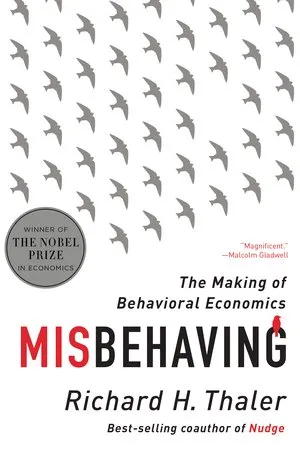
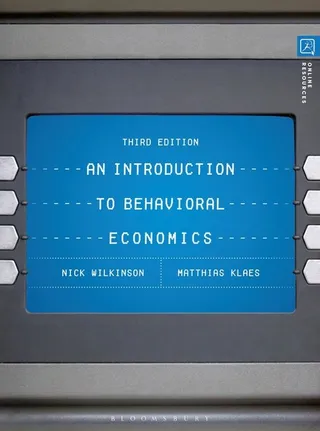
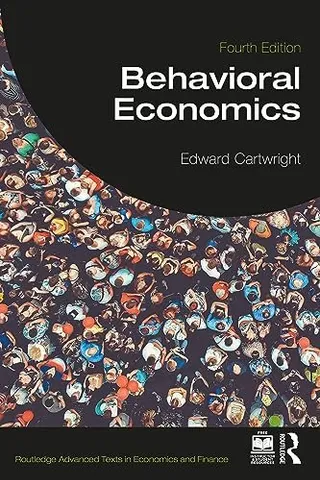
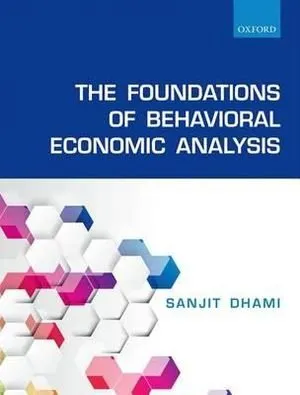
The other books in this course teach the field more gently or more systematically. Baddeley's Behavioural Economics: A Very Short Introduction and Thaler's Misbehaving are accessible accounts for general readers, the latter a first-person history of the field. Cartwright's Behavioral Economics and Wilkinson and Klaes's An Introduction to Behavioral Economics are textbooks that set evidence beside formal models. Dhami's The Foundations of Behavioral Economic Analysis is a single-author graduate treatise.
This volume is the primary-literature reader: it provides the original papers behind much of what those books summarize. Read it after one of the textbooks, or alongside the Dhami treatise at graduate level, and use the introductory essay to orient yourself first.
How to Use This Book
The book suits graduate students and advanced undergraduates who can read journal articles in economics, and researchers who want the key papers in one volume.
A practical plan:
- Start: Chapter 1, the survey essay, then Chapters 2 and 3 for the endowment effect and mental accounting.
- Core theory: Chapters 4–7 on risk and time, and Chapters 9–10 on fairness.
- By interest: Chapters 14–24 are grouped by field, so macroeconomics readers can go to Chapters 14–17, labor economists to 18–21, and finance readers to 22–24.
- Later: Chapters 12–13 on game theory and Part Four on new foundations.
Read each paper with its reference list in hand, reproduce one or two of the experiments or calibrations if possible, and compare the field studies with the laboratory results.