01 / Reading Guide
Reading Guide
Citation
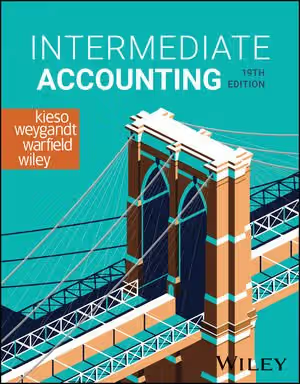
Kieso, D. E., Weygandt, J. J., Warfield, T. D., & Wiley, L. D. (2024). Intermediate Accounting (19th ed.). Wiley.
Chapter Summary
The book has 23 chapters and six appendices, in the order a second-year financial reporting course normally follows: the reporting framework and the accounting cycle first, then the statements, then each class of asset, liability and equity, and finally the topics that cut across the statements. Chapters are divided into numbered sections and typically close with a presentation and decision-analysis section, an appendix or two, and practice material including Excel-based "Analytics in Action" activities.
Chapters 1–2: The Environment and Conceptual Framework of Financial Reporting; The Accounting Information System
Chapter 1 covers the standard-setting setting (the SEC, the FASB, other organizations and the FASB Codification), the eight parts of the conceptual framework, the assumptions and principles of GAAP, and challenges such as the expectations gap and ethical issues. Chapter 2 reviews the accounting cycle: journals and ledgers, adjusting entries, the trial balance, closing, and the statements of a merchandising company, with appendixes on cash-basis accounting, reversing entries and the worksheet.
Chapters 3–4: Income Statement, Related Information, and Revenue Recognition; Balance Sheet and Statement of Cash Flows
Chapter 3 treats the income statement, special items (discontinued operations, other comprehensive income), equity statements, a first look at the five-step revenue model, and quality of earnings. Chapter 4 covers balance sheet classification and format and introduces the statement of cash flows, with appendixes on notes and disclosure techniques and a ratio-analysis reference.
Chapter 5: Accounting and the Time Value of Money
Present and future value of single sums and annuities, deferred annuities, bond valuation and present value measurement, with an appendix on Excel and financial calculators. It is the quantitative base for later chapters on bonds, leases and pensions.
Chapters 6–8: Cash and Receivables; Valuation of Inventories: A Cost-Basis Approach; Inventories: Additional Valuation Issues
Receivables cover variable consideration, uncollectible accounts and notes. The two inventory chapters treat cost flow assumptions (including LIFO issues), inventory errors, lower of cost or net realizable value, the gross profit and retail methods.
Chapters 9–11: Acquisition and Disposition of Property, Plant, and Equipment; Depreciation, Impairments, and Depletion; Intangible Assets
Long-lived assets: cost, capitalized interest, asset retirement obligations, depreciation methods, impairment, depletion, then intangibles, goodwill and research and development costs.
Chapters 12–15: Current Liabilities and Contingencies; Long-Term Liabilities; Stockholders' Equity; Dilutive Securities and Earnings per Share
Liabilities and equity: payables, unearned revenue and contingencies; bonds, notes and troubled-debt restructuring; corporate capital, treasury stock and dividends; convertibles, warrants, stock compensation and basic and diluted earnings per share.
Chapters 16–17: Investments; Revenue Recognition
Debt and equity investments, the equity and consolidation methods, and the fair value option; then the five-step revenue model in full, with returns, repurchase agreements, warranties and disclosure, and appendixes on long-term construction contracts and franchises.
Chapters 18–20: Accounting for Income Taxes; Accounting for Pensions and Postretirement Benefits; Accounting for Leases
The three technically heaviest topics: deferred tax assets and liabilities and operating losses; defined benefit plan accounting with a pension worksheet; and lessee and lessor accounting for finance and operating leases, with sale-leasebacks.
Chapters 21–23: Accounting Changes and Error Analysis; Statement of Cash Flows; Full Disclosure in Financial Reporting
Changes in principle and estimate and error correction; the full preparation of the cash flow statement by the indirect and direct methods with a worksheet; and disclosure, subsequent events, segment and interim reporting, auditor's and management's reports, and basic financial statement analysis.
Appendices A–F
Private company accounting; specimen financial statements of Procter & Gamble, Coca-Cola and PepsiCo; derivative instruments; and environmental, social and governance reporting.
Key Concepts
Chapters 1–5: Framework and Statements
- Conceptual framework: the objectives, qualitative characteristics, elements, recognition, measurement, presentation and notes concepts that guide standard-setting.
- Accounting cycle: the sequence from transaction analysis to closing entries.
- Time value of money: the present and future value tools used for valuation throughout the book.
Chapters 6–11: Assets
- Cost flow assumptions: the choice among inventory methods and its effect on reported results.
- Impairment: write-downs of long-lived assets and goodwill.
Chapters 12–20: Liabilities, Equity and Complex Items
- Effective-interest method: the basis for amortizing bonds and notes.
- Five-step revenue model: contract, performance obligations, transaction price, allocation and satisfaction.
- Deferred taxes and pension and lease accounting: the major recognition-and-measurement topics of the later chapters.
Chapters 21–23: Quality of Reporting
- Error analysis and full disclosure: correcting prior statements and deciding what must be reported in notes.
Critical Analysis
Strengths
- Complete sequence in a single volume. The contents run from the framework through every major balance sheet class to disclosure, with specimen statements of three large companies to practise reading real reports.
- Practice at the point of learning. The Wiley description highlights "Put It Into Practice" exercises, a bulleted and numbered presentation, brief exercises, exercises, analysis problems and Critical Thinking Cases, scaffolded in difficulty.
- Current topics included. The 19th edition adds crypto assets, cybersecurity disclosures and an ESG appendix, and moves derivatives to a stand-alone appendix.
- Data skills woven in. Each chapter has "Analytics in Action" material, and some end-of-chapter items have Excel templates.
Limitations
- Size and pace. At 23 chapters with multiple appendices it holds more material than a single short course can cover, so a syllabus has to choose among chapters and appendices.
- US GAAP orientation. The framework, standard-setter and specimen statements are American; readers on IFRS-based courses need a supplement, and the Wiley page does not describe any IFRS comparison for this edition.
- Not a first course. It reviews the conceptual framework and the accounting cycle in Chapters 1–2, but it is an intermediate text, and the later chapters (taxes, pensions, leases) build on that foundation.
Where It Fits in the Course
This is the detailed preparer's text in the financial accounting list. Weetman's Financial Accounting: An Introduction and the OpenStax Principles of Accounting, Volume 1 are first-course books; Libby's Financial Accounting is an introductory text aimed at users and decision-making. Read Kieso after one of these. Atrill and McLaney's Financial Accounting for Decision Makers treats the statements from the user's side; Kieso works from the preparer's side, setting out recognition and measurement rules item by item.
Scott and O'Brien's Financial Accounting Theory asks why reporting takes its present form and what it is used for, and belongs after or beside Kieso: Kieso supplies the rules, Scott and O'Brien the economic reasoning behind them.
How to Use This Book
The book is for accounting and finance majors and for professional exam candidates who have completed an introductory financial accounting course.
- Core: Chapters 1–4 to fix the framework and statements, Chapter 5 for time value, then Chapters 6–11 on assets and 12–14 on liabilities and equity.
- Technical block: Chapters 17–20 (revenue, taxes, pensions, leases) after the earlier chapters; each is difficult and rewards slow, worked study.
- Optional or later: Chapters 15–16, 21–23 and Appendices A, E and F can follow course emphasis.
- Practice: do the in-chapter Put It Into Practice items before the end-of-chapter exercises, and use the Excel templates and specimen statements in Appendices B–D to apply each chapter to real reports.