01 / Reading Guide
Reading Guide
Start biology with one main text and a quantitative check
Compare two broad biology texts and a free quantitative companion, then connect cells, inheritance and evolution through six practical outputs.
Study route and exercise: University Reading List editorial project.
Citation
Urry, L. A., Cain, M. L., Wasserman, S. A., Minorsky, P. V., & Orr, R. B. (2020). Campbell Biology (12th ed.). Pearson.
Chapter Summary
The 12th edition has 56 chapters in eight units. An opening chapter on the themes of biology comes first. Appendices follow the units: answers, a classification of life, a comparison of the light and electron microscope, and a Scientific Skills Review. The publisher describes it as a text that guides students through every unit of the course, helping them connect concepts across scales, interpret data and build scientific skills.
Chapter 1: Evolution, the Themes of Biology, and Scientific Inquiry
The opening chapter introduces the themes that run through the book, with evolution first among them. It also presents scientific inquiry as a way of working.
Unit 1: The Chemistry of Life (Chapters 2–5)
Four chapters: "The Chemical Context of Life", "Water and Life", "Carbon and the Molecular Diversity of Life" and "The Structure and Function of Large Biological Molecules". They give the chemical basis for the cell chapters that follow.
Unit 2: The Cell (Chapters 6–12)
Seven chapters: "A Tour of the Cell", "Membrane Structure and Function", "An Introduction to Metabolism", "Cellular Respiration and Fermentation", "Photosynthesis", "Cell Communication" and "The Cell Cycle". The unit moves from cell structure to energy and metabolism, then to signalling and division.
Unit 3: Genetics (Chapters 13–21)
Nine chapters: "Meiosis and Sexual Life Cycles", "Mendel and the Gene Idea", "The Chromosomal Basis of Inheritance", "The Molecular Basis of Inheritance", "Gene Expression: From Gene to Protein", "Regulation of Gene Expression", "Viruses", "DNA Tools and Biotechnology" and "Genomes and Their Evolution". The sequence runs from classical inheritance to molecular genetics and genomics.
Unit 4: Mechanisms of Evolution (Chapters 22–25)
Four chapters: "Descent with Modification: A Darwinian View of Life", "The Evolution of Populations", "The Origin of Species" and "The History of Life on Earth".
Unit 5: The Evolutionary History of Biological Diversity (Chapters 26–34)
Nine chapters:
- "Phylogeny and the Tree of Life"
- "Bacteria and Archaea"
- "Protists"
- "Plant Diversity I: How Plants Colonized Land"
- "Plant Diversity II: The Evolution of Seed Plants"
- "Fungi"
- "An Overview of Animal Diversity"
- "An Introduction to Invertebrates"
- "The Origin and Evolution of Vertebrates"
Unit 6: Plant Form and Function (Chapters 35–39)
Five chapters: "Vascular Plant Structure, Growth, and Development", "Resource Acquisition and Transport in Vascular Plants", "Soil and Plant Nutrition", "Angiosperm Reproduction and Biotechnology" and "Plant Responses to Internal and External Signals".
Unit 7: Animal Form and Function (Chapters 40–51)
Twelve chapters. The unit opens with "Basic Principles of Animal Form and Function", "Animal Nutrition" and "Circulation and Gas Exchange". It continues with "The Immune System", "Osmoregulation and Excretion", "Hormones and the Endocrine System", "Animal Reproduction" and "Animal Development". It closes with "Neurons, Synapses, and Signaling", "Nervous Systems", "Sensory and Motor Mechanisms" and "Animal Behavior".
Unit 8: Ecology (Chapters 52–56)
Five chapters: "An Introduction to Ecology and the Biosphere", "Population Ecology", "Community Ecology", "Ecosystems and Restoration Ecology" and "Conservation Biology and Global Change".
Key Concepts
Chapter 1 and Units 1–2
- Themes of biology and scientific inquiry: the unifying ideas of the book, named in the title of Chapter 1.
- Molecular diversity of life: how carbon chemistry and large biological molecules underlie living systems.
- Metabolism, respiration and photosynthesis: the energy chapters of the cell unit.
- Cell communication and the cell cycle: how cells signal and divide.
Units 3–4
- Inheritance and gene expression: Mendelian and chromosomal inheritance, then the path from gene to protein and its regulation.
- Biotechnology and genomes: the DNA tools and genome chapters.
- Descent with modification: the Darwinian view of life that opens the evolution unit, followed by population evolution, speciation and the history of life.
Units 5–8
- Phylogeny and diversity: the tree of life as the frame for bacteria, protists, plants, fungi and animals.
- Form and function: how plants and animals are built and how their systems work.
- Ecology and global change: from populations and communities to ecosystems, conservation and global change.
Critical Analysis
Strengths
- Complete coverage in one book. The book spans chemistry, cells, genetics, evolution, diversity, plant and animal physiology and ecology, so a single volume can serve a whole introductory sequence. Recent courses use it for both cellular and organismal biology: Union College's Spring 2024 cellular course uses it for the chemistry and cell units, and Southern Utah University's Fall 2025 Bio II course uses it for evolution, diversity and form and function (both listed under course assignments below).
- Study tools built into chapters. The publisher describes Scientific Skills exercises for interpreting data. It also describes end-of-chapter Summary of Key Concepts questions and Test Your Understanding questions that prepare students for exam-style questions. The appendix includes a Scientific Skills Review.
- Evolution as an organising idea. The first chapter places evolution among the themes of biology. A full unit then treats its mechanisms before the diversity unit begins. SUU's Bio II course opens with a "Nature of Science / Evolution" unit built on Chapter 1 and Chapters 22–26, using this framing as the entry point to a second semester.
- Modular chapters. Courses select chapters and reorder them. Union's cellular course inserts part of Chapter 16 (DNA structure) into its chemistry and cell sequence. SUU reads the plant diversity chapters (29–30) alongside the plant form-and-function chapters (35–38) rather than reading Unit 5 straight through.
Limitations
- Too long for one semester. At 56 chapters, instructors and students must select; a course will not cover all eight units in a single term. Union's cellular course reads Chapters 1–12 plus selected pages of Chapter 16. SUU's Bio II course covers about fifteen chapters and marks Chapters 1, 25 and 38 as partial "as time permits".
- Practice tools are sold separately. The publisher lists Mastering Biology as a separate product from the eTextbook. Students who need the online tutorials should check what their course includes.
- An introductory survey. The book spans all of biology in 56 chapters. A course that needs research-level depth in cell and molecular topics will need a more specialised text, such as Lodish and colleagues' Molecular Cell Biology in the same course list.
Where It Fits in the Course
In the general biology course, Campbell Biology is the comprehensive majors-level survey. Several other texts cover similar ground:
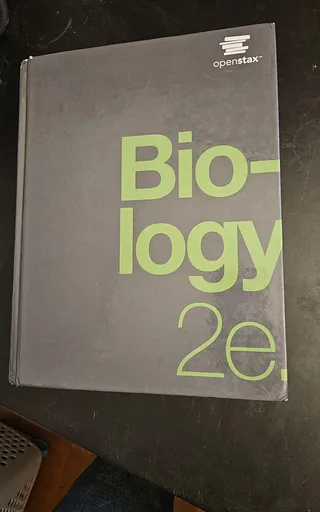
- Clark, Douglas and Choi's Biology 2e is a two-semester introduction for biology majors that overlaps closely with Campbell's scope.
- Fowler, Roush and Wise's Concepts of Biology is an accessible survey for students who want the major ideas without the depth of a majors sequence.
- Freeman's Biological Science is an inquiry-driven introduction that connects the major areas through evidence and experiments.
- Sadava and colleagues' Life: The Science of Biology is another comprehensive introductory text.
The two recent courses below offer complementary reading paths through the 12th edition. The Union College course on cellular foundations draws on Chapter 1 and Units 1–2. The Southern Utah University course on evolution, diversity and organismal biology draws on Chapter 1 and selections from Units 4–6. An older MIT OpenCourseWare course, also listed below, used the 8th edition.
Two texts give more depth. Lodish and colleagues' Molecular Cell Biology treats the cell and molecular topics of an introductory course in research depth. Milo and Phillips's Cell Biology by the Numbers teaches cellular biology through quantities and estimates. Both are better read after Campbell Chapters 6–12 and 13–21.
How to Use This Book
The publisher lists the book under biology for majors, so it is aimed at undergraduates beginning a biology or life-science degree. No prerequisites are stated, and the book begins with a chemistry unit.
A practical plan:
- Start with Chapter 1. Then follow the order of the units.
- Two-semester sequence: read Units 1–4 in the first semester and Units 5–8 in the second.
- Single semester: choose Chapter 1 and Units 1–4, then add selected chapters from the later units that your course uses.
- Study tools: use the Scientific Skills exercises to practise reading graphs and data. Use the Summary of Key Concepts at the end of each chapter to test yourself before moving on.
- Appendices: treat the answers and the Scientific Skills Review as reference.
Real courses do not always follow the printed unit order. If your syllabus jumps between units, read the chapters in the order the course assigns them. Then use the unit structure above to see where each chapter sits in the whole book.
Common course assignments
Both recent syllabi below use the 12th edition, so their chapter numbers match this guide.
Bio I / cellular foundations: Union College, BIO104 Cellular Foundations of Life, Spring 2024 (syllabus). The course uses the 12th edition (2020) by Urry et al. and also accepts the 11th. The lecture readings run:
- Chapters 1–3
- Chapters 4–5
- Chapter 5 (continued) plus Chapter 16, pp. 314–320 and 330–332
- Chapter 6
- Chapters 7–8
- Chapter 8 (continued) plus Chapter 9
- Chapter 9 (continued) plus Chapter 10
- Chapter 10 (continued)
- Chapter 11
- Chapter 12
This is essentially Chapter 1 with Units 1–2. A short excursion into "The Molecular Basis of Inheritance" sits alongside the large biological molecules.
Bio II / evolution and organismal biology: Southern Utah University, BIOL 1620-02 General Biology II, Fall 2025 (syllabus). The course is organised in three units:
- Unit 1, Nature of Science / Evolution: Chapters 1*, 22, 23, 24, 25* and 26. This covers part of the themes chapter, Chapters 22–25 of the Mechanisms of Evolution unit (with Chapter 25 covered partially as time permits), and "Phylogeny and the Tree of Life".
- Unit 2, Plant diversity, form and function: Chapters 29, 30, 35, 36, 37 and 38*. These are the two Plant Diversity chapters followed by most of Unit 6.
- Unit 3, Animal diversity, form and function: Chapters 32, 33 and 34: animal diversity, invertebrates and vertebrates.
* Covered partially, as time permits.
Self-studying readers can combine these two paths into a selective route through the book. Use Union's path for cells and SUU's path for evolution and organisms. Add the genetics unit (Chapters 13–21), the animal form-and-function unit and the ecology unit as your goals require.
Historical: MIT OpenCourseWare 7.01SC Fundamentals of Biology (Fall 2011) names the 8th edition (2008). Its readings are not a guide to 12th-edition chapter numbers.
Edition and access check
The print edition listed here (ISBN 9780135188743) dates from 2020, according to Pearson's product page. The same page also lists an eText (ISBN 9780135988046, 2021) under a ©2022 heading; these are other formats of the same edition. A book-only purchase does not guarantee Mastering access.
Both recent courses above use the 12th edition, and Union also accepts the 11th. If you use an older edition, check its chapter numbers against your syllabus.
University reading list sources
- MIT OpenCourseWare — 7.01SC Fundamentals of Biology (Fall 2011)
The archived syllabus names Biology, 8th edition (2008), as the campus textbook. This is historical evidence for the title, not for the 12th edition listed here.
Checked :